

If you’ve been putting off the Semrush vs. Serpstat decision because both tools look roughly the same on paper, you’re not wrong, and you’re not alone. They share most of the same feature categories. The price gap is real. And the reviews on both sides are suspiciously enthusiastic.
Here’s what actually changed the calculus in 2025: an estimated 15–20% of queries that previously drove Google traffic now resolve through AI-powered interfaces like ChatGPT, Perplexity, and Google AI Overviews.
Semrush responded in October 2025 by launching Semrush One, which bundles its traditional SEO toolkit with AI search visibility tracking. Serpstat hasn’t made a comparable move. That single difference now shapes how this comparison plays out for a meaningful chunk of SEO teams.
This guide cuts through the feature tables and gives you a straight answer on which tool fits your situation. And if you already know what you need but want a team to execute it, Flying V Group’s SEO services are a logical next step.
What You’re Actually Choosing Between
Think of it this way: Semrush is the Swiss Army knife. Serpstat is the chef’s knife. One does everything reasonably well; the other does a specific job exceptionally well and costs less.
Semrush has grown well beyond its SEO roots into a full digital marketing platform with 26+ billion keywords, social media scheduling, PPC research, content marketing tools, and now AI search visibility tracking. Over 3 million marketers use it. If your team needs one login that covers every channel without juggling multiple subscriptions, that breadth is the point.
Serpstat covers SEO fundamentals across 230 regional Google databases, with particular depth in international markets. Around 250,000 active users rely on it, mostly agencies and freelancers who need solid keyword and competitor data without paying for features they’ll never open. Its narrower scope isn’t a weakness. It’s a deliberate trade-off that keeps the price accessible and the interface clean.
Quick verdict before we go deeper: Semrush wins on scope and AI search coverage; Serpstat wins on price and international keyword data. Everything else in this comparison is context for that sentence.
Feature by Feature: Where Each Tool Wins
Keyword Research
Semrush’s Keyword Magic Tool is the strongest in its class. The phrase match filters, semantic clustering, and intent tagging across 26+ billion keywords give you enough data to build an entire content strategy without leaving the platform. Serpstat’s keyword research is solid and covers long-tail discovery well, but its KD scores have a documented tendency to underestimate difficulty for competitive US-market terms. That’s not a dealbreaker for most use cases, but if you’re using KD as a planning input, verify it before committing.
Backlink Analysis
Both tools do the job. Semrush’s backlink database is deeper, and the toxic link detection integrates directly into the audit workflow. Serpstat’s module includes a useful lost-and-found function that surfaces link gains and drops over time, which is handy for tracking the effect of outreach without running separate reports.
Site Audits
Serpstat runs scheduled automatic crawls by default, which suits teams that want ongoing monitoring without manually triggering audits each time. Semrush’s audit module is more detailed and ties directly into on-page fix recommendations. Neither is dramatically better; it comes down to whether you prefer push or pull.
Competitor Research
This is where Serpstat earns its price. Its competitor analysis across 230 regional databases is particularly strong for non-English markets, including Eastern Europe, Southeast Asia, and Latin America. If you’re running campaigns where Semrush’s data gets thin, Serpstat often picks up what the bigger tool misses. For US-focused campaigns, Semrush holds the edge on traffic estimates and page-level data.
Which One Is Easier to Actually Use?
Semrush is genuinely powerful and genuinely overwhelming at first. The left nav alone has enough options to keep you clicking for a week before you’ve touched half the tools. That’s not a criticism; it reflects what you’re paying for. Most practitioners find their footing within a few weeks, and Semrush Academy’s documentation helps considerably.
Serpstat’s interface is cleaner, more focused, and noticeably faster to navigate. You can pull keyword data, run a competitor analysis, and check your rankings without hunting through menus. If your team doesn’t have a dedicated SEO specialist, or if the platform mostly sits open in one browser tab, Serpstat’s lower friction is a genuine advantage.
The short version: Semrush rewards investment. Serpstat rewards simplicity.
What Does Each Tool Cost in 2026?
Semrush raised its prices and restructured its plans in 2025. Here’s where the classic SEO toolkit sits today:
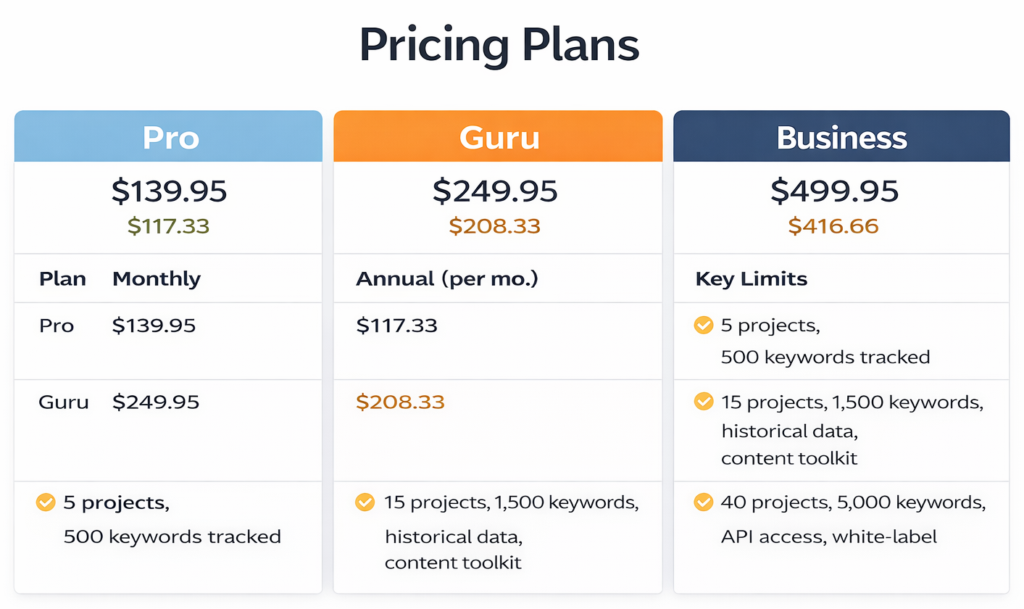
The new tier worth knowing about is Semrush One, starting at $165/month on annual billing. It bundles the classic SEO toolkit with AI Visibility Tracking, which monitors your brand and keyword mentions inside AI-generated answers on ChatGPT, Perplexity, and Google AI Overviews. Compared to the classic Pro plan at $117.33/month, you’re paying roughly $48 more per month for visibility data that simply doesn’t exist anywhere else right now. For teams actively working on GEO, that’s not a hard call. For teams focused purely on traditional search, the classic plans still make sense. Full breakdown on Semrush’s pricing page.
Serpstat’s current pricing is more approachable:
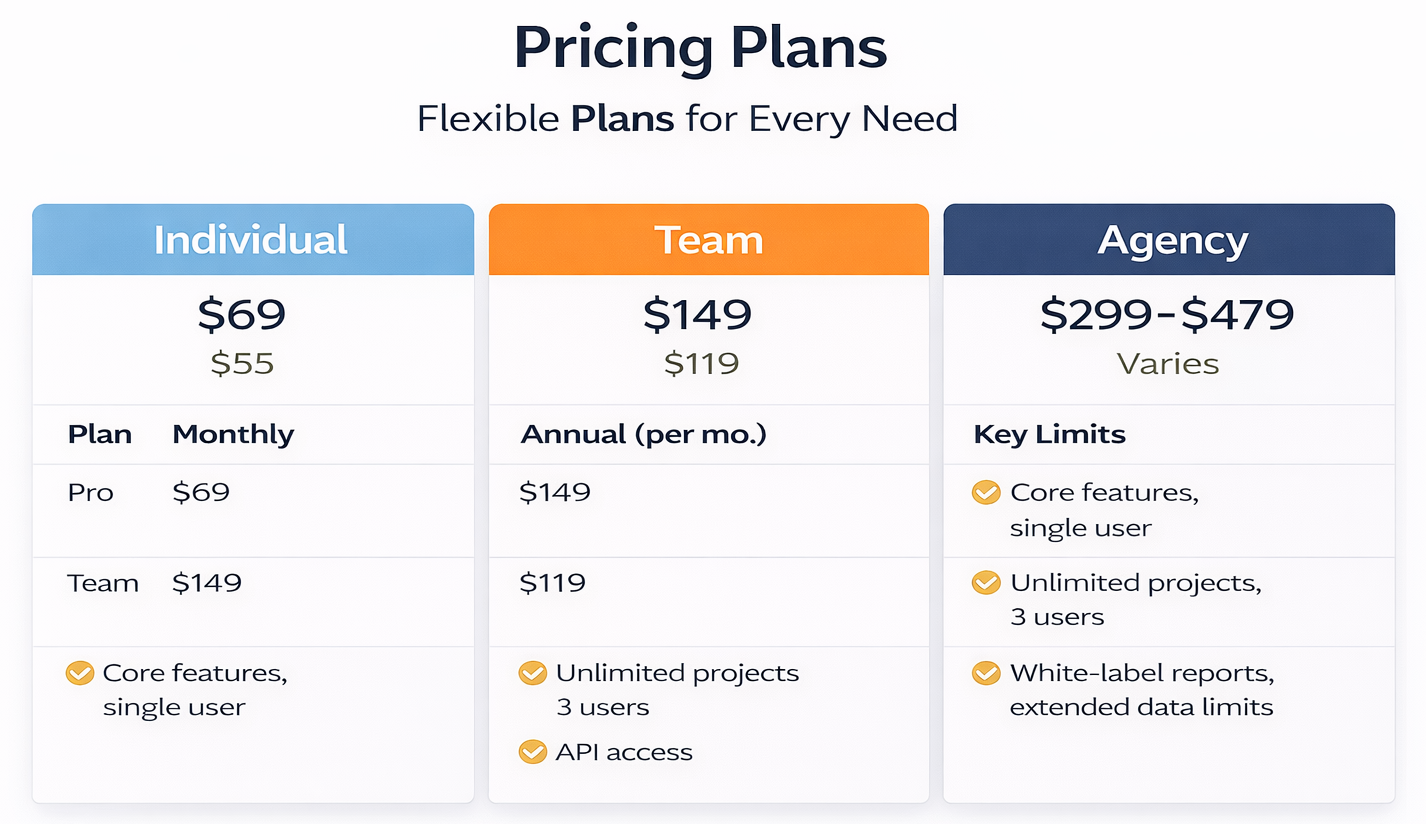
For a deeper breakdown of what each Serpstat tier actually includes, FVG’s Serpstat pricing guide is worth a look. Both platforms discount roughly 20% on annual billing. Serpstat offers a 7-day free trial. Semrush’s free version exists, but it is too restricted to evaluate the product properly.
The One Area Serpstat Can’t Touch
Most Semrush vs. Serpstat comparisons were written before October 2025. That matters because Semrush One changed the comparison in a way that older writeups don’t account for.
Semrush AI visibility tracking, included in every Semrush One plan, shows you whether your content is being cited in AI-generated answers. Not just ranked in Google. Actually cited, by name, inside the responses that ChatGPT, Perplexity, and AI Overviews are serving to your potential customers right now.
Serpstat has nothing like this.
Why does it matter? Because optimizing for AI citation frequency (what the industry is now calling Generative Engine Optimization, or GEO) requires a different playbook than traditional SEO: schema markup, structured data, authoritative sourcing, and direct-answer formatting. You can implement all of it blind and hope it works, or you can measure whether it’s actually moving the needle. Semrush One gives you the measurement. Serpstat doesn’t.
This isn’t a knock on Serpstat. It’s a genuinely strong tool within its lane. But if you’re asking which platform is built for where search is going, the answer is Semrush, and by a wider margin than the feature tables suggest.
So Which One Should You Pick?
Choose Semrush if:
- You’re managing multiple clients or projects and need everything in one place
- You want PPC research, social media analytics, and content tools alongside your SEO data
- AI search visibility is on your radar, either because you’re already running a GEO program or you know you need to start one
- You have the budget and a few weeks to climb the learning curve
Choose Serpstat if:
- You need solid core SEO data without paying for a full marketing suite
- You’re running international campaigns, especially in regions where Semrush’s data gets patchy
- You’re a freelancer or a small team where platform simplicity directly affects how much you actually use the tool
- Budget is a real constraint, and Semrush’s entry price is genuinely hard to justify
The choice is rarely about which tool is objectively better. It’s about what your program actually requires and being honest about the gap between what you need today versus what you’d theoretically use if you paid more.
Run Your SEO Program with Flying V Group
The tool tells you what to fix. It doesn’t fix it for you.
Flying V Group builds SEO programs that connect rankings to revenue, not just traffic reports. Our Director of SEO, Sean Fulfor,d leads a team that handles everything from technical audits and content strategy to schema implementation and AI visibility optimization for clients across professional services, e-commerce, and technology.
If you’ve figured out your toolset and want a team that knows what to do with the data, let’s talk.
Frequently Asked Questions
Is Serpstat worth it in 2026?
For most freelancers and small teams, yes. It covers keyword research, rank tracking, site audits, and competitor analysis at around $69/month, which is roughly half the cost of Semrush’s entry plan. The gaps show up in US-market keyword accuracy (Serpstat’s KD scores tend to run optimistic), backlink database depth, and the complete absence of AI search visibility data. If none of those gaps affect your current program, Serpstat is a solid value. If they do, you’re looking at Semrush or supplementing with additional tools, which often costs more than just upgrading in the first place.
What’s the best Serpstat alternative?
Depends what you need from it. Semrush is the most common upgrade path, with more data, more integrations, and Semrush One for AI visibility if that’s on your radar. Ahrefs is the go-to for teams where backlink analysis drives most of the work. SE Ranking and Mangools fill the mid-price gap reasonably well. Worth noting: if you’re doing international campaigns in non-English markets, Serpstat is often the better tool rather than the one being replaced. Its regional database coverage in Eastern Europe and Southeast Asia outperforms most alternatives at the same price point.
How does Semrush One pricing compare to a standard Semrush plan?
The classic Pro plan runs $117.33/month on annual billing. Semrush One Starter runs $165/month. The difference gets you AI Visibility Tracking, meaning you can see whether your content is being cited inside ChatGPT, Perplexity, and Google AI Overview responses, not just ranking in traditional search. If you’re actively working on GEO or want to start, the delta is worth it. If you’re running a pure traditional SEO program with no near-term plans to track AI citation performance, stick with the classic plans and revisit in six months.
How accurate is Serpstat’s data compared to Semrush?
Semrush is more accurate for US-market keyword volume and backlink data, with a larger database and daily updates versus Serpstat’s monthly cycle. Serpstat’s KD scores in particular tend to underestimate difficulty for competitive terms, which can make keyword targeting feel easier than it actually is. For international markets, especially Eastern Europe and Southeast Asia, Serpstat’s regional depth narrows the gap considerably. For most teams making practical day-to-day SEO decisions, both tools give you enough to work with. For high-stakes programs where keyword difficulty is a primary planning input, the accuracy difference matters.
Is there a difference between “Semrush vs. Serpstat” and “Serpstat vs. Semrush”?
Not from a product standpoint. The word order usually just reflects which tool you’re coming from. “Semrush vs. Serpstat” typically means you’re already in the Semrush ecosystem and wondering if Serpstat is worth considering. “Serpstat vs. Semrush” usually means you’re on Serpstat and evaluating whether it’s time to upgrade. Either way, you end up with the same comparison.
Which SEO tool is better for small businesses?
At the early stages, Serpstat’s $69/month Individual plan covers the essentials without stretching the budget. If you’re a local service business tracking a manageable keyword set, it’s more than enough. As you scale nationally, produce content at volume, or start any GEO work, the gaps in Serpstat’s capabilities begin to show, and the case for Semrush’s Guru plan or Semrush One becomes clearer. The tool is a secondary decision. The strategy it informs is the primary one. If you want a second opinion on where you actually are on that spectrum, Flying V Group works with businesses at both stages.