

Choosing between Serpstat and Ahrefs feels like choosing between two competent surgeons—both can do the job, but one might be better suited to your specific operation. The wrong choice wastes budget and creates workflow friction. The right choice compounds your SEO advantage month after month.
This comparison cuts through the marketing noise. We’re comparing features, pricing, accuracy, and real-world performance—not just listing bullet points.
Feature Comparison: What Each Tool Actually Does
Both tools address the same core SEO needs: keyword research, backlink analysis, rank tracking, site audits, and competitor analysis. But depth and accuracy differ significantly.
Serpstat’s Approach:
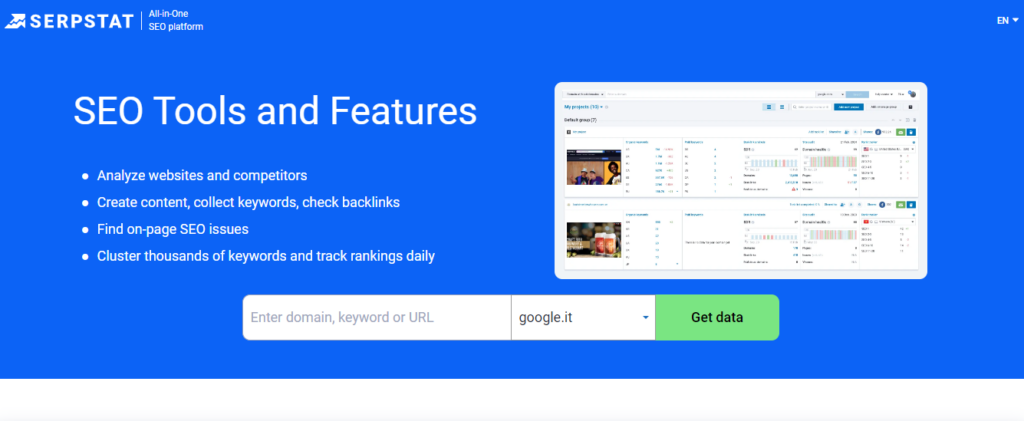
Serpstat offers a full-featured toolkit with over 230 million keywords and 1.8 billion backlinks. The interface is intentionally simple—designed for accessibility. Keyword research includes search volume, difficulty scores, and trends. Backlink analysis covers referring domains and authority metrics. Site audit identifies technical issues. Rank tracking monitors keyword positions. Competitor analysis reveals keyword strategies and backlink profiles.
The philosophy: get the job done efficiently without overwhelming users.
Ahrefs’ Approach:
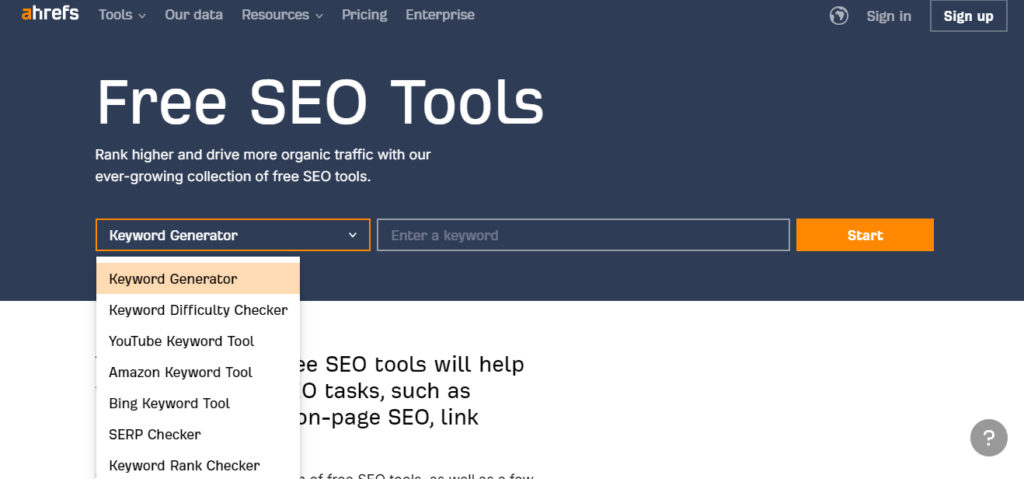
Ahrefs operates at a different scale. Over 10 billion keywords and 200 trillion backlinks. Provides deeper data—click-through rates, keyword intent classification, and granular backlink metrics. Advanced features include content gap analysis, SERP feature tracking, and multi-touch attribution modeling.
The philosophy: provide comprehensive data depth for professionals willing to invest time learning the tool.
Database Size & Data Accuracy
Database size matters, but more importantly: how current is that data?
Serpstat continuously updates its databases but operates on a smaller crawl budget. The 230 million keyword database and 1.8 billion backlink index are comprehensive for most use cases. Backlink data typically updates within 2-4 weeks.
Ahrefs crawls the web more aggressively. 10 billion keywords and 200 trillion backlinks provide broader coverage. Backlink data refreshes within days of discovery. For competitive analysis in saturated markets, this depth matters.
According to G2’s comparative user reviews, Ahrefs users report higher data comprehensiveness, particularly for backlink research. Serpstat users praise adequacy of data without premium pricing.
Ease of Use & Learning Curve
Serpstat: Fast Setup, Low Learning Curve
Serpstat wins on accessibility. The dashboard is clean, navigation is intuitive, and new users can generate keyword research and backlink reports within 15 minutes.
The tradeoff is less customization and fewer advanced filtering options. It’s well-suited for SEO beginners, freelancers, and small agencies with straightforward workflows. Most users report feeling productive almost immediately.
Ahrefs: Powerful, But Requires Investment
Ahrefs requires more onboarding but offers far more control once you’re proficient. The dashboard supports deep customization, but exploring all features takes time. Extensive documentation and tutorials help, yet the learning curve is real.
This makes Ahrefs a better fit for agencies, in-house teams, and professionals running complex SEO strategies. The initial 2–3 week learning period pays off if the tool is used daily.
What Users Say About Ease of Use
Software Advice’s breakdown confirms this distinction: Ahrefs users report satisfaction with features but acknowledge steeper initial setup. Serpstat users consistently praise ease of use as a primary strength, which matters when you’re context-switching between multiple tools.
Backlink Analysis: Which Tool Wins
This is where Ahrefs pulls ahead clearly. Backlink data quality and depth directly influence competitive positioning.
Ahrefs: Deep Backlink Intelligence for Competitive SEO
Ahrefs offers toxic link detection, anchor text analysis, link velocity tracking, and detailed authority metrics. Its backlink index is so extensive that many teams use Ahrefs to audit competitors before launching outreach campaigns.
You can see exactly which pages link to competitors, the anchor text used, and the authority of each referring domain—critical for building and replicating winning link strategies.
Serpstat: Solid Backlink Monitoring for Everyday Use
Serpstat covers backlink fundamentals well. It identifies referring domains, tracks new and lost links, and provides authority scores. This is sufficient for monitoring your own backlink profile and understanding competitor link strategies at a high level. However, it lacks the granular detail needed for advanced competitive link analysis.
The Practical Difference in Backlink Strategy
With Ahrefs, you can pinpoint specific high-authority pages linking to competitors and understand why those links exist. With Serpstat, you know competitors have backlinks, but you don’t get enough detail to confidently replicate or outperform their linking strategy.
Keyword Research: Real-World Differences
Both tools identify keywords, but differently. The approach you need depends on your strategy phase.
Serpstat: Fast, Rankable Keyword Discovery
Serpstat focuses on finding viable keywords with reasonable search volume and moderate difficulty. Good for building long-tail strategies and identifying quick wins. The keyword suggestions feel practical because they’re filtered toward rankability.
If you’re asking “what can I actually rank for?” Serpstat answers that quickly. This makes it ideal for execution-focused teams that need keyword lists they can immediately create content around.
Ahrefs: Intent-Led Keyword Intelligence
Ahrefs provides broader keyword data with intent classification and click-through rate metrics. This allows you to understand not just “can I rank?” but “will traffic convert?” The ability to segment keywords by intent (commercial, informational, transactional) is powerful for content strategy. You can see estimated traffic potential before investing in content creation.
For pure keyword discovery, Ahrefs is more comprehensive. For practical keyword selection in competitive niches, both work—Serpstat gets you there faster and with less analysis paralysis. Many teams use Serpstat for initial research, then validate findings with Ahrefs’ intent data.
Pricing & Value Calculation
This is where budget concerns surface, and the decision becomes more straightforward.
Serpstat starts at roughly $70-90/month for basic plans, scaling to $400+/month for advanced features. Fair pricing for small to mid-size businesses and freelancers. No long-term commitment required, which reduces switching costs if you decide to migrate.
Ahrefs starts at $99/month but quickly climbs to $399-999+/month for serious users. Annual commitment often required, which locks you into a tool choice. The premium is significant, but enterprise teams justify it through the data depth and competitive advantage.
The question isn’t which is cheaper—it’s which delivers ROI for your situation:
| Scenario | Best Choice | ROI Timeline |
| Freelancer, 5 sites | Serpstat | 30-60 days |
| Small agency, 10-15 clients | Serpstat or Hybrid | 60-90 days |
| Mid-market agency, 20+ clients | Hybrid (both tools) | 2-3 months |
| Enterprise in-house team | Ahrefs | 3-6 months (depends on content velocity) |
SearchAtlas’ cost-value analysis notes that Serpstat offers the best value for budget-conscious users, while Ahrefs justifies premium pricing through data comprehensiveness.
Customer Support & Community
Serpstat offers email support, live chat, and a knowledge base. The community is active but smaller. Response times are reasonable (24-48 hours typical).
Ahrefs provides email support, live chat, and extensive documentation with video tutorials. The community is larger and more active. Response times are faster. The documentation advantage is real—learning resources are comprehensive.
For enterprise support needs, Ahrefs has the advantage. For straightforward support, both are adequate.
Which Tool Should You Choose?
Choose Serpstat if:
- You’re managing 1-15 websites and need core SEO functionality
- Budget constraints are real (startups, freelancers, small agencies)
- You want to get results quickly without extensive training
- You prioritize simplicity over data depth
- You need keyword research and basic competitor analysis
Choose Ahrefs if:
- You’re managing 15+ sites or running enterprise SEO strategy
- Budget allows for premium tools and data depth is a priority
- You need advanced analysis: content gaps, SERP features, multi-touch attribution
- You require comprehensive backlink research for competitive positioning
- Your team has time to master complex features
- You’re pitching clients on detailed SEO audits
Making the Decision: Trial Both
Both tools offer trial versions that let you test core features. Run parallel trials: identify 5 keywords you care about, analyze competitor backlinks, run a site audit. See which interface feels natural to your workflow.
The best tool isn’t the most powerful—it’s the one you’ll actually use consistently.
How Flying V Group Uses These Tools
We don’t choose between Serpstat and Ahrefs—we use both strategically. Serpstat powers initial keyword research and quick audits where speed and efficiency matter. Ahrefs is reserved for deep competitive analysis, content gap identification, and detailed backlink research where data depth is critical.
The real advantage isn’t the tool itself—it’s how the data is interpreted. Tools provide signals; strategy provides direction. We combine tool output with business context, including customer acquisition costs, competitive positioning, and revenue impact, to recommend keyword strategies that move P&L, not just rankings.
Verdict: Speed vs Strategic Depth
Serpstat delivers faster ROI for execution-focused teams.
Ahrefs delivers strategic advantage for teams that can act on depth.
Choosing the Right Tool for Your Team
If you’re evaluating SEO tools, the better question isn’t “Which tool is best?” but “Which tool aligns with our strategy and budget?” We help teams answer that question and build keyword strategies that leverage the right tool for their specific growth model.
Ready to Apply the Right Strategy?
Ready to build an SEO strategy backed by the right tool and expert interpretation? Contact Flying V Group for a consultation on tool selection and keyword strategy that drives real business results.
📞 Schedule a Consultation | 💬 Get in Touch
Frequently Asked Questions
What’s the main difference between Serpstat and Ahrefs?
Scale and depth. Serpstat covers core SEO needs efficiently with a smaller database. Ahrefs provides comprehensive data with advanced features. Ahrefs costs more; Serpstat offers better value for budget-limited teams.
Which tool is better for keyword research?
Ahrefs for depth and intent classification. Serpstat for practical, rankable keyword identification. Most professionals use both—Ahrefs for strategic insight, Serpstat for execution speed.
Can I use both tools simultaneously?
Yes. Many agencies use Serpstat for client execution and Ahrefs for competitive intelligence. The combined cost (~$150-500/month) is reasonable for teams running multiple accounts.
How often do the databases update?
Ahrefs updates backlinks within days; Serpstat within 2-4 weeks. For real-time backlink monitoring, Ahrefs wins. For strategy-level keyword analysis, both are current enough.
What’s the trial experience like?
Both offer limited trials showing core features. These trials are enough to determine if the tool fits your workflow. Use trials to test specific use cases relevant to your business.
Does Serpstat work well for agencies?
Yes. Serpstat’s affordability and speed make it ideal for agencies managing 5-20 client accounts. The user-friendly interface reduces training time. For 30+ accounts, Ahrefs’ data depth becomes more necessary.
Should I commit long-term or month-to-month?
Serpstat offers flexible monthly plans, reducing switching costs. Ahrefs typically requires annual commitment, which benefits committed teams. If you’re still deciding, start with Serpstat’s monthly flexibility while testing Ahrefs on a trial.