

Here’s the disconnect most SEO strategies get wrong: they chase volume when they should chase intent. A keyword with 50,000 monthly searches sounds attractive until you realize 90% of that traffic converts to nothing. Meanwhile, a long-tail keyword with 200 monthly searches brings qualified prospects ready to buy.
The difference between long-tail and short-tail keywords isn’t just semantic—it’s strategic. It determines whether your SEO effort produces rankings or revenue. This guide breaks down which approach actually works and when.
The Core Difference: Long-Tail vs Short-Tail Keywords
According to Ahrefs’ comprehensive guide on long-tail vs short-tail keywords, the distinction hinges on specificity and user intent.
Short-Tail Keywords: High Volume, Low Intent
Short-tail keywords are broad, generic phrases—typically one to three words. “SEO tools,” “running shoes,” “digital marketing.” They attract massive search volume but equally massive competition. A searcher using a short-tail keyword is usually early in their research phase, exploring options without clear intent. They might be casually browsing, comparing alternatives, or still deciding what they actually need.
Long-Tail Keywords: Lower Volume, Higher Conversion
Long-tail keywords are specific, multi-word phrases targeting niche audiences. “Best SEO tools for content marketers,” “women’s running shoes for flat feet,” “affordable digital marketing for startups.” They have lower search volume and less competition, but the traffic is far more qualified—these users have clear problems and are actively looking for specific solutions.
The SEO.com analysis of long-tail versus short-tail strategy highlights why this matters: long-tail keywords often align more closely with actual user intent, making them easier to rank for and more likely to convert.
Why this distinction matters for your business:
Understanding this difference is foundational to SEO strategy because it determines how you allocate content resources and which keywords offer genuine competitive advantage. In saturated industries, ranking for short-tail keywords can take years of authority building. Long-tail keywords, by contrast, offer faster wins and more immediate traffic.
Why Long-Tail Keywords Deliver Better ROI
Volume is vanity. Conversion is reality.
Short-tail keywords can drive impressive traffic numbers—thousands of monthly visits. But most of that traffic doesn’t match what you actually offer. A searcher typing “shoes” might want athletic footwear, dress shoes, or hiking boots. Your shoe store ranks for the keyword, but the visitor bounces because they weren’t looking for what you sell.
Long-tail searchers are different. They’ve already narrowed their intent. They know what they want. This distinction translates directly to business outcomes:
Conversion rates are significantly higher.
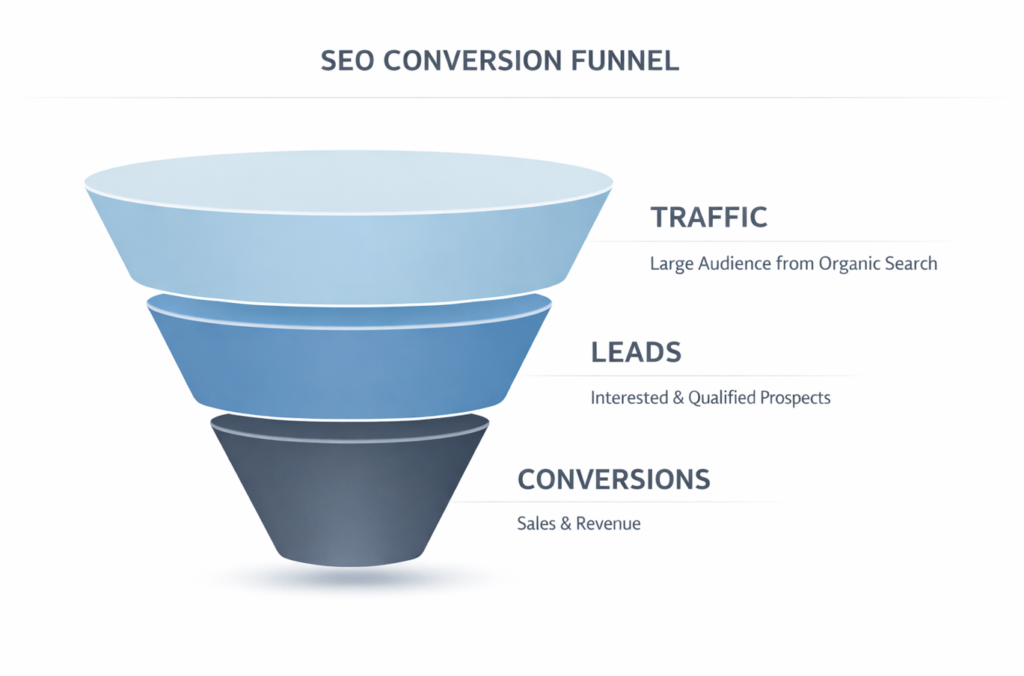
Targeted searchers convert at substantially better rates than exploratory ones. Long-tail traffic is warmer—these visitors are further down the funnel and closer to making a purchase decision. Studies consistently show that long-tail keywords convert 2-3x better than short-tail equivalents.
Ranking is actually achievable.
You can realistically rank for long-tail keywords in competitive industries without years of domain authority. Short-tail keywords often demand established credibility before you can compete. This makes long-tail a practical starting point for newer sites or businesses entering competitive verticals.
Content is easier and faster to produce.
Writing content for “women’s winter running shoes with arch support” is straightforward—you target a specific audience need. Writing authoritative content that ranks for “shoes” requires competing with established retailers and massive content machines. Long-tail content can be produced more efficiently and still drive meaningful traffic.
You build authority incrementally.
Long-tail rankings create the foundation for broader keyword growth. As you accumulate rankings across multiple long-tail variations, search engines recognize your topical authority, making short-tail keywords increasingly achievable over time.
How to Find High-Intent Long-Tail Keywords Using Ahrefs
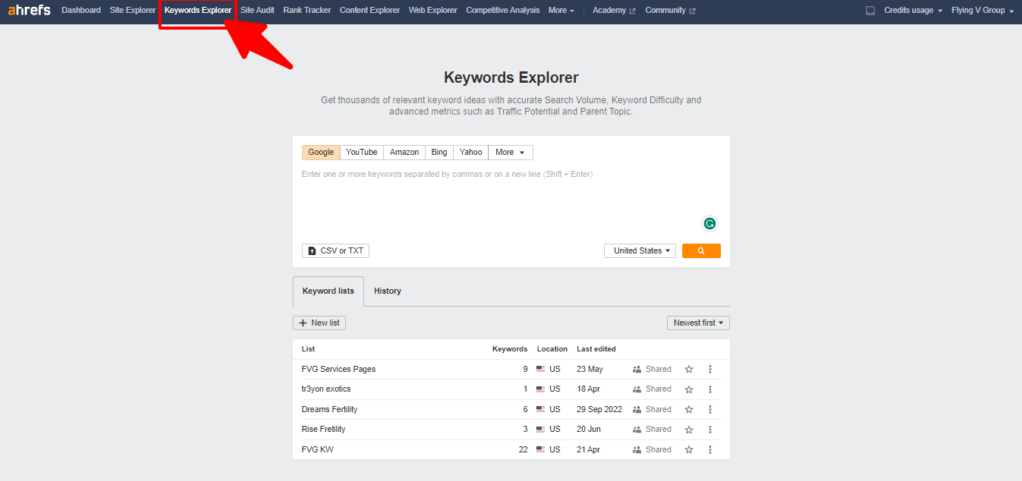
Step 1: Start with Ahrefs Keyword Explorer
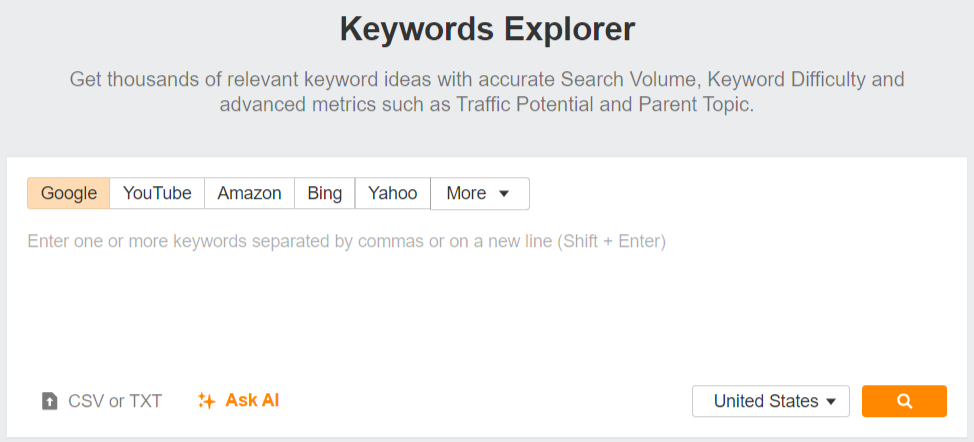
Log into Ahrefs Keyword Explorer and enter a seed keyword—something broad that describes your niche. This is your starting point.
Step 2: Analyze Search Volume and Keyword Difficulty
Ahrefs will populate search volume and keyword difficulty scores. For long-tail strategy, look for keywords with specific characteristics. Moderate search volume (100-500 monthly searches) is often optimal—specific enough to indicate real demand, but broad enough to be worth targeting your content resources.
Lower keyword difficulty (under 30-40 on Ahrefs’ scale) means you have a realistic chance of ranking within 3-6 months. High relevance to your actual offering ensures that ranking traffic converts to customers, not just impressions.
Step 3: Explore Variations and Phrases
Use Ahrefs’ “Phrase Match” and “Having Same Terms” filters to uncover long-tail variations. These filters reveal how searchers phrase specific questions and what language they actually use. This is invaluable for content targeting because you’ll discover the exact phrasing your audience uses, allowing you to create content that matches their search queries perfectly.

Step 4: Analyze Competitor Keywords
Check which long-tail keywords competitors rank for using Ahrefs’ competitor analysis features. Look for gaps: keywords they’re ranking for that you’re not, and keywords you should be competing on that they’re ignoring. This competitive intelligence helps you identify underserved keyword opportunities where you can enter the market with less resistance.
Step 5: Prioritize by Relevance, Not Volume
Build your final keyword list by prioritizing keywords that align with your products or services. A keyword with 300 monthly searches but perfect product fit beats a 1,000 search keyword that’s only tangentially relevant. This is where strategy diverges from pure metrics. The best keywords are those that will drive traffic you can actually convert.
Short-Tail Keywords: When to Use Them
Long-tail isn’t always the answer. Short-tail keywords have their place—you just need to know when.
Brand awareness campaigns. If you want visibility and traffic volume regardless of conversion, short-tail keywords work. They’re useful for establishing presence and authority.
Established domain authority. If you’re already a recognized brand with strong domain metrics, short-tail keywords become achievable. You have the authority to compete.
Competitive advantage. If you have a genuine competitive edge (better product, lower price, unique service), short-tail keywords can drive high-volume traffic that converts.
Content hubs. Comprehensive, authoritative content pieces targeting broad topics can rank for short-tail keywords, especially if they also target related long-tail variations.
The Hybrid Approach: Why the Best Strategy Uses Both
The highest-performing SEO strategies don’t choose between long-tail and short-tail keywords—they use both. Long-tail keywords form the foundation, delivering faster wins, early momentum, and insight into real user intent. They help you attract qualified traffic while generating data on what your audience actually searches for.
Over time, that foundation supports broader short-tail targets. As authority and relevance grow through long-tail performance, search engines are more willing to rank your site for competitive terms. This two-tier approach balances conversion and discovery, recognizing that keyword competitiveness shifts as your domain strength increases.

Common Mistakes with Long-Tail Keywords
Keyword cannibalization. Creating multiple pages targeting nearly-identical long-tail variants (like “running shoes for women” and “women’s running shoes”) splits your ranking power. Instead, group similar keywords on one comprehensive page.
Ignoring search volume entirely. A keyword with five monthly searches is too niche—not enough volume to justify content investment. Long-tail is specific, not extinct.
Writing content for keywords, not people. The worst long-tail strategy forces keywords into content unnaturally. Write first for human readers, optimize for keywords second.
Forgetting about user experience. A long-tail keyword that attracts qualified traffic still needs good page speed, clear CTA, and relevant content. Ranking doesn’t equal conversion without execution.
Accelerate Your Long-Tail Strategy with Flying V Group
Building a sustainable keyword strategy requires more than just tool output. It requires understanding intent, competitive dynamics, and how keywords tie to business outcomes.
Flying V Group combines Ahrefs’ keyword research capabilities with strategic thinking about your revenue model. We don’t just find keywords—we architect keyword strategies that drive qualified traffic and sales.
We identify the long-tail opportunities where you can realistically compete, then build content and authority to move toward higher-volume keywords as your domain grows. This compound approach accelerates results without the false promise of quick ranking wins.
Ready to build a keyword strategy that actually converts? Contact Flying V Group for a custom long-tail keyword analysis and competitive positioning.
Frequently Asked Questions
What are realistic examples of long-tail keywords?
Examples include phrases like “best running shoes for marathon training,” “affordable organic cotton yoga pants,” or “SaaS project management tools for remote teams.” These keywords are typically three or more words long, highly specific, and tied to clear user intent. Instead of broad research, they reflect someone closer to making a decision or taking action.
How do I know if a long-tail keyword is worth targeting?
A good long-tail keyword usually has modest but consistent search volume (roughly 100–500 searches per month), manageable keyword difficulty (often under 40), and strong relevance to your product or service. Tools like Ahrefs help validate these metrics, but you should also check whether the search intent matches what your page can realistically satisfy.
Can I rank for long-tail keywords faster than short-tail keywords?
Yes. Long-tail keywords generally face less competition, which means newer or lower-authority sites can gain traction faster. It’s common to see ranking movement within 8–12 weeks, while competitive short-tail keywords often require sustained authority building over many months or longer.
Should I ignore short-tail keywords completely?
No. Short-tail keywords still matter, but they should be treated as long-term goals. The most effective strategy is to build topical authority through long-tail keywords first, then gradually compete for broader terms as your domain strength, backlink profile, and content depth improve.
What’s the relationship between long-tail keywords and voice search?
Long-tail keywords closely mirror how people speak when using voice search or AI assistants. For example, “SEO tools” is a short-tail query, while “what are the best SEO tools for small businesses” reflects natural, conversational phrasing. As voice and AI-driven search grow, long-tail queries become increasingly valuable for capturing high-intent traffic.