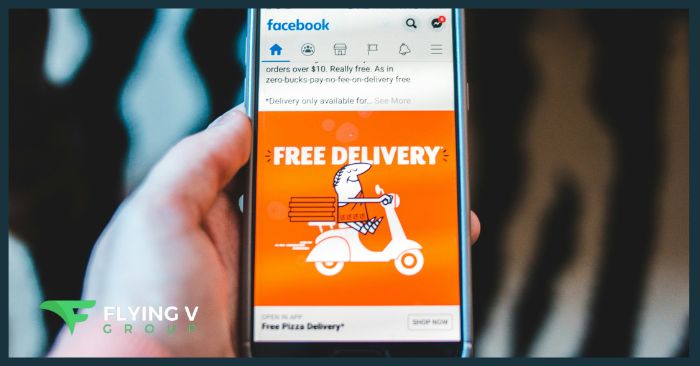

Programmatic advertising reached $8.4 billion in U.S. digital audio spend alone in 2025, according to the IAB/PwC Internet Advertising Revenue Report. Across display, audio, video, social, and connected TV, programmatic buying now accounts for the majority of all digital ad transactions globally. The question for most advertisers is not whether to use programmatic channels, but which combination is right for their audience and goals.
Flying V Group builds programmatic advertising strategies across all major channels for businesses that want digital spend working harder. See what a cross-channel programmatic programme looks like for your business.
What Makes Programmatic Advertising Different
Programmatic advertising automates the buying of ad inventory using real-time bidding and audience data, replacing manual negotiation with algorithmic precision. Ads reach the right person at the right moment across whichever channel they are using, rather than being placed on a fixed site regardless of audience fit.
The channel you choose shapes the creative format, the audience you can reach, and how performance is measured. Each of the six channels below has distinct strengths, and a well-structured programmatic strategy typically combines two or more of them into a coordinated media plan.
Channel 1: Display Advertising
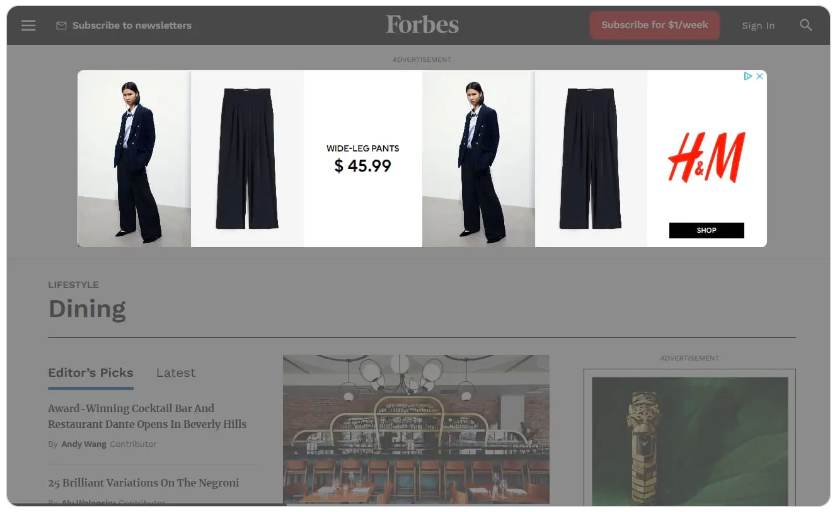
Display advertising is the foundational programmatic channel, placing visual ads across millions of websites and apps through ad exchanges. It excels at building brand visibility at scale and driving retargeting campaigns that re-engage users who have previously visited your site.
Targeting and Creative Optimization
Advanced audience targeting allows display campaigns to reach users based on demographics, browsing behaviour, purchase intent, and contextual relevance. Retargeting campaigns layer on top of this to recapture users who showed intent but did not convert.
Creative testing is equally important. Running multiple ad variations against different audience segments reveals which combinations of imagery, headline, and CTA drive the highest click-through and conversion rates. Display campaigns without systematic creative testing consistently underperform.
Measuring Display ROI
Track click-through rate (CTR), conversion rate, cost per acquisition (CPA), and view-through conversions to assess how display ads contribute to your broader marketing funnel. Display rarely drives the last click but frequently influences the decision. Attribution modelling that accounts for assisted conversions gives a more accurate picture of display’s true contribution.
Channel 2: Audio and Podcast Advertising on Spotify
Spotify Advertising gives advertisers access to over 640 million monthly active users across streaming music and podcasts, with programmatic buying, targeting, and measurable attribution available through Spotify Ads Manager. It has become one of the most scalable programmatic audio channels available.
Why Audio Is Outperforming Other Formats
According to the IAB/PwC 2025 Internet Advertising Revenue Report, podcast ad revenue grew 17.6% year-over-year to $2.9 billion in 2025. Podcast mid-roll ads carry just an 8% skip rate compared to 65% for YouTube pre-roll, per Spotify Advertising’s benchmarks, and host-read ads deliver 71% higher brand recall than pre-produced spots according to Nielsen.
Spotify’s Programmatic Advantages
Spotify’s first-party data covers listening behaviour, playlist context, demographic signals, and device type. Advertisers can target by genre, mood, activity, and moment. Spotify’s 2026 multi-task learning model reduced effective cost-per-stream by 20%, improving efficiency for programmatic audio buyers.
For brands looking to build awareness in a low-clutter, high-attention environment, Spotify Advertising offers reach that display and social cannot replicate. Start advertising on Spotify today with Spotify Ads Manager.
Channel 3: Video Advertising
Video advertising combines the attention-capturing power of sight, sound, and motion with programmatic precision. It is the fastest-growing programmatic channel by ad spend, with digital video growing 25.4% in 2025 per IAB/PwC data — outpacing every other format including social (22.6%) and audio (10.2%).
Video Ad Formats
- In-stream ads run before, during, or after video content on platforms including YouTube and OTT services. They reach viewers already in an engaged viewing state.
- Out-stream ads appear in non-video environments such as news feeds and article pages, expanding reach beyond dedicated video platforms.
- Interactive ads invite participation through polls, overlays, or clickable elements, driving deeper engagement and measurable conversion lift.
Platform-Specific Strategies
YouTube skippable in-stream ads balance reach with viewer choice — advertisers pay only when a viewer watches 30 seconds or engages. For Instagram and social feeds, shorter vertical formats outperform landscape video due to the mobile-first consumption pattern. OTT platforms support non-skippable placements for fully captive audiences, which is appropriate for brand awareness objectives where completion rate is the primary KPI.
Channel 4: Social Media Advertising
Social media programmatic advertising leverages the first-party audience data of platforms with billions of active users. Each platform offers distinct targeting depth and creative formats, requiring tailored strategies rather than cross-posted campaigns.
Facebook and Instagram
Facebook Ads Manager supports cross-platform programmatic campaigns with targeting across demographics, interests, and behaviours. Lookalike audiences extend reach to users who match the profiles of existing customers, making them one of the most cost-efficient prospecting tools in programmatic advertising.
LinkedIn and X (Twitter)
LinkedIn’s Campaign Manager enables precise B2B targeting by job title, function, seniority, company size, and industry — making it the primary programmatic channel for reaching professional buyers. X’s Ads platform supports automated bidding for conversion objectives with targeting by interest, keyword, and engagement context.
Channel 5: Connected TV and OTT
Connected TV (CTV) and Over-the-Top (OTT) advertising delivers programmatic ad buying into the living room, reaching audiences on smart TVs and streaming services with the targeting precision of digital and the impact of full-screen television.
Why CTV Is Growing
CTV ad spend grew 14.2% in 2025 per IAB/PwC data, as linear TV advertising declined 13.4% in the same period. The shift reflects where audience attention is going. CTV reaches viewers in a lean-back, high-attention environment with non-skippable placements and digital measurement capabilities unavailable in traditional broadcast.
CTV vs. OTT: A Practical Distinction
CTV refers specifically to ads served on internet-connected televisions. OTT refers to content delivered directly over the internet via streaming services or devices, viewable on any screen. In practice, most programmatic CTV/OTT strategies address both simultaneously through DSPs that aggregate inventory across smart TVs, Roku, Fire TV, and streaming apps.
Targeting and Measurement
Leverage first-party data for personalised targeting and cross-device campaigns that follow the viewer from the living room to mobile. Measurement covers views, completion rates, and post-exposure conversion tracking, capabilities that make CTV/OTT more accountable than traditional TV buying.
Channel 6: Mobile Advertising
Mobile advertising reaches users within their most-used apps and across the mobile web, capturing attention throughout the day in contexts that desktop advertising cannot access. Global smartphone adoption and app usage make mobile a high-frequency, high-reach programmatic channel.
Mobile Trends Worth Acting On
Location-based services deliver personalised ads based on real-time user location, which is relevant for local service businesses, retail, and event marketers. Mobile video, particularly vertical formats, continues to outperform horizontal placements in engagement due to native fit with how people hold their phones. In-app programmatic advertising reaches users within the apps where they spend the most time, leveraging rich behavioural data for precise targeting.
Engaging Mobile Users Without Creating Fatigue
Design ads that are responsive across screen sizes and orientations. Interactive formats including rewarded video, playable ads, and carousel units drive higher engagement than static display on mobile. Implement frequency capping and creative rotation to prevent the ad fatigue that erodes performance in always-on mobile campaigns.
Building a Multi-Channel Programmatic Strategy
No single programmatic channel covers every audience touchpoint. A user might discover your brand through a Spotify audio ad during their commute, see a retargeted display ad while reading the news, and convert through a YouTube video ad days later. Multi-channel strategies capture that full journey.
Channel selection should reflect where your specific audience spends time. B2B advertisers typically weight LinkedIn, display retargeting, and YouTube. Consumer brands targeting 18-35 audiences typically weight Spotify, social video, and CTV.
Start Building a Smarter Programmatic Mix
Most businesses are already spending on digital advertising. The question is whether each channel is pulling its weight and whether they are working together. Flying V Group’s programmatic advertising practice builds cross-channel programmes where display, audio, CTV, and social reinforce each other rather than compete for the same budget. Reporting connects directly to business outcomes, not impression counts.
Contact us to map out what that looks like for your goals.
Frequently Asked Questions
What are programmatic advertising channels?
Programmatic advertising channels are digital platforms where ad inventory is bought and placed automatically using algorithms and real-time bidding. The six primary channels are display, audio and podcast advertising, video, social media, connected TV and OTT, and mobile. Each channel reaches audiences differently and requires distinct creative formats and measurement approaches.
How does programmatic advertising on Spotify work?
Spotify Advertising allows brands to reach over 640 million monthly active users through programmatic audio ads and podcast placements via Spotify Ads Manager. Advertisers can target by listening behaviour, playlist context, genre, mood, demographics, and device type. Podcast ad revenue on Spotify grew significantly in 2025, and Spotify’s platform update in 2026 improved effective cost-per-stream by 20% through its multi-task learning model.
Which programmatic channel has the highest engagement?
Podcast and audio advertising consistently delivers some of the highest engagement metrics in digital advertising, including an 8% skip rate for mid-roll podcast ads versus 65% for YouTube pre-roll and 71% higher brand recall for host-read ads compared to pre-produced spots. CTV advertising also delivers strong completion rates and attention metrics due to the lean-back, non-skippable viewing environment.
How do I measure programmatic advertising performance?
Key metrics vary by channel. For display: CTR, conversion rate, and CPA. For audio and podcast: listen-through rate, brand recall lift, and website attribution. For video: completion rate, view-through conversion, and cost per completed view. For CTV: reach, frequency, completion rate, and incremental TV reach. For social: engagement rate, cost per lead, and ROAS. For mobile: click-through rate, in-app actions, and location-based attribution.
What is the difference between CTV and OTT?
CTV refers to ads served specifically on internet-connected television screens. OTT refers to content and advertising delivered over the internet via streaming services or devices, viewable on any screen including mobile, tablet, desktop, and TV. In programmatic buying, the two are typically purchased together through DSPs that aggregate inventory across smart TVs, streaming sticks, and streaming apps.
Can small businesses use programmatic advertising channels?
Yes. Programmatic advertising channels offer scalable entry points that suit a wide range of budgets. Display retargeting, Spotify audio ads, and social media programmatic campaigns can all be structured around modest monthly budgets with precise audience targeting. The minimum viable investment depends on the channel and the competitive intensity of the target audience, but programmatic is not limited to large-budget advertisers.
How do programmatic advertising channels work together?
Programmatic channels work together by reaching the same audience at different points in their day and decision journey. A coordinated cross-channel strategy might use Spotify audio ads for upper-funnel awareness, display retargeting for mid-funnel consideration, and YouTube or social video for lower-funnel conversion. Each channel reinforces the others, and unified reporting across channels reveals which combinations produce the highest overall return on ad spend.