
Healthcare marketing has evolved beyond awareness campaigns into search-driven systems that connect patient intent to action. The most effective campaigns in 2026 combine evidence-based messaging with visibility where decisions happen: Google Search, AI-generated answers, and high-intent landing pages.
This article showcases five healthcare marketing campaigns that exemplify modern principles: trust-building through authoritative content, multi-channel reach aligned with patient behavior, and measurable outcomes beyond impressions. These examples demonstrate how healthcare organizations translate communication strategy into sustainable patient acquisition.
1. CDC Health Communication Campaigns
The Centers for Disease Control and Prevention sets the standard for public health communication through comprehensive, evidence-based campaigns addressing critical health issues from diabetes prevention to infectious disease management. Each initiative targets specific public health concerns with the aim of preventing and managing widespread health conditions through coordinated messaging.
These campaigns skillfully utilize an integrated approach combining social media, digital platforms, traditional print media, radio, and broadcast TV. This broad spectrum ensures comprehensive coverage and maximizes impact across diverse audience segments.
How to apply this locally
Carilion Clinic’s #YESMAMM shows how awareness turns into action when the next step is obvious. Do the same at a local level by pairing your message with searches people already make, like “airport to cruise terminal” or “hospital discharge to home.” Keep copy, headlines, and CTAs consistent across ads, your Google Business Profile, and the landing page so users move from intent to booking without a detour.
In Florida, Call the Care Miami-Dade, Broward, and Palm Beach and uses “Popular Directions” content for high-intent routes such as Miami Airport to PortMiami and Fort Lauderdale Airport to PortMiami. The pages keep “Book a ride” visible, show what to expect, and make it easy for travelers with mobility challenges to choose and schedule a ride.
To replicate this approach, start with two or three routes that match real demand in your market. Add a short FAQ and clear expectations on timing and pricing, and make booking possible in two clicks or one call. Track three simple KPIs: landing page conversion rate, click to call taps, and time to book from first visit. Expand to common non-leisure trips like hospital discharge to home when you see search and booking signals.
What Makes It Modern
Research on health communication campaigns shows that well-designed initiatives targeting specific behaviors and audiences can significantly influence public health outcomes. CDC campaigns exemplify this through authoritative, science-based content coupled with strategic distribution.
Evidence from the Community Preventive Services Task Force confirms that campaigns integrating mass media with supportive interventions produce stronger outcomes than awareness messaging alone. The use of diverse platforms enables effective communication with various population segments.
2. NHS – “Help Us Help You” Campaign
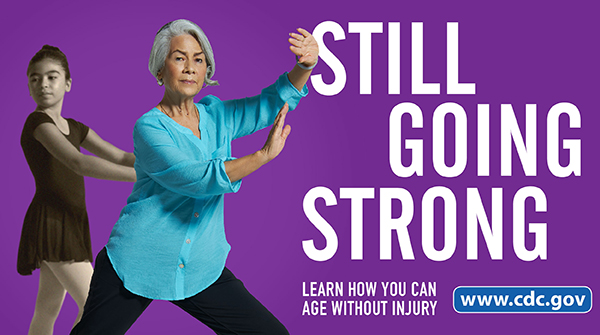
The National Health Service’s “Help Us Help You” campaign represents search-driven public health marketing at scale, guiding patients to appropriate care levels while reducing system strain. This initiative built around search behavior and symptom-based queries drives users to the right service—GP, pharmacy, urgent care, or A&E—instead of delivering generic awareness messaging.
NHS structured content hubs around common health queries: “should I go to A&E,” “pharmacy vs GP,” “urgent care near me.” This SEO-aligned approach ensures visibility when patients actively search for guidance, capturing high-intent moments that determine healthcare utilization.
Search-Led Patient Guidance
The campaign’s strength lies in intent-based landing pages with clear CTAs tied to real-world healthcare decisions. Internal linking guides users through symptom assessment to appropriate next steps, reducing emergency department overuse while improving patient outcomes.
This represents a fundamental shift from campaign-based awareness to always-on patient guidance systems. By aligning content with search behavior, NHS captures patients at decision points rather than hoping earlier messaging influences future choices.
3. Cleveland Clinic – Health Library & SEO Strategy
Cleveland Clinic’s Health Library exemplifies how authoritative content ecosystems drive healthcare growth. This isn’t a marketing campaign—it’s infrastructure that dominates Google for symptoms, conditions, and treatment queries through thousands of physician-reviewed articles.
The Health Library contains content structured specifically for search visibility and patient utility, covering conditions, treatments, procedures, and preventive care with medical accuracy balanced for consumer audiences. Cleveland Clinic built this resource for E-E-A-T before Google formally named the concept.
Authority Content Infrastructure
Every article includes physician credentials, medical review dates, and citation standards that establish credibility search engines reward. The library’s structure prioritizes featured snippets, AI summaries, and zero-click results—formats that increasingly mediate patient-provider connections.
This approach converts trust into appointments and referrals systematically. Patients researching symptoms encounter Cleveland Clinic’s authoritative guidance, establishing the organization as their logical choice when booking care. The Health Library functions as perpetual patient acquisition infrastructure.
4. Mayo Clinic – Social Media Residency Program
Mayo Clinic pioneered digital literacy for healthcare providers through its Social Media Residency Program, training staff to navigate platforms responsibly while enhancing patient communication and community engagement. The program equips healthcare professionals with skills to craft engaging content, interact with patients, and manage online communities while adhering to healthcare privacy standards.
Participants learn hands-on training in social media tools and analytics software that enable measurement of engagement impact and strategy refinement. This initiative recognizes that modern healthcare communication demands platform-specific expertise.
Building Authentic Digital Presence
Rather than outsourcing social presence to marketing teams, Mayo Clinic embedded digital competency directly into clinical staff development. The program’s focus on comprehensive digital literacy for healthcare providers sets standards for institutional engagement with online communities.
Effects include significantly enhanced ability to communicate health messages widely, improved dissemination of medical information, expanded patient support networks, and fostered public health literacy. This approach builds trust through expertise made accessible.
5. Kaiser Permanente – Personalized Digital Health Journeys
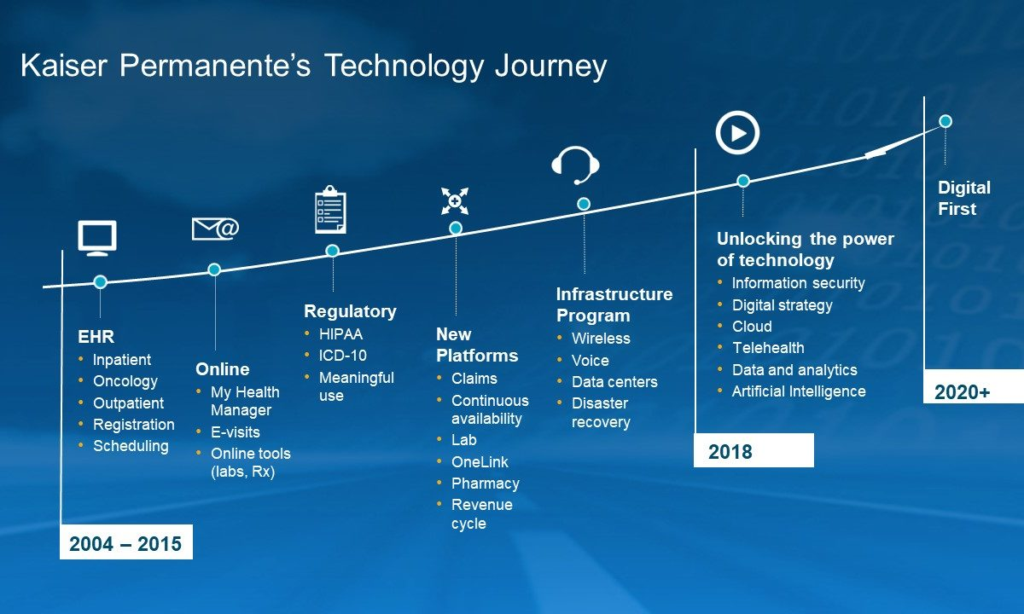
Kaiser Permanente’s personalized digital health journeys represent healthcare marketing’s evolution from campaigns to lifecycle systems, integrating search, portals, email, and mobile into unified patient experiences. Kaiser’s approach focuses on personalization, first-party data, and care continuity rather than one-time messaging.
The system uses predictive outreach for screenings, follow-ups, and prevention based on patient history, risk factors, and care patterns. This represents a fundamental shift: from interrupting patients with health messages to providing relevant guidance at decision points throughout their care journey.
Data-Driven Personalization
Kaiser leverages first-party data for personalization that generic campaigns can’t match. Patients receive screening reminders timed to their risk profiles, follow-up communications specific to their conditions, and preventive guidance aligned with their health trajectories.
The integration across channels—member portal, mobile app, email, SMS—creates continuity impossible in campaign-based approaches. Patients experience coordinated guidance rather than disconnected touchpoints, improving engagement and health outcomes simultaneously.
What These Campaigns Teach Modern Healthcare Marketers
While these healthcare marketing campaigns span different organizations and approaches, they share common foundations: evidence-based messaging, audience trust, multi-channel distribution, and clear paths from awareness to action. What’s changed is how patients discover and act on health information.
In 2026, search engines, local results, AI summaries, and zero-click experiences often replace traditional campaign touchpoints. Systematic reviews show that mass media campaigns can change health behavior, but effectiveness multiplies when coordinated with digital engagement tactics.
Modern Campaign Requirements
The most effective healthcare marketing now combines proven communication principles with search visibility, conversion-focused UX, and measurable outcomes. Research on social media health campaigns confirms they improve knowledge and attitudes—necessary steps toward behavioral change.
However, measuring long-term impact remains challenging without integrated measurement systems. The shift is from isolated campaigns to connected infrastructure that captures patient intent whenever it occurs.
Applying These Principles in Modern Healthcare Marketing
At Flying V Group, we apply the same principles behind these successful campaigns—trust, clarity, and behavior change—through modern, search-driven strategies designed for how patients actually find and choose healthcare providers today. Instead of relying solely on awareness campaigns, we help healthcare organizations win visibility where decisions happen.
Our healthcare SEO services focus on connecting evidence-based messaging to measurable outcomes such as appointment bookings, calls, and patient acquisition. We build systems that work continuously rather than campaigns that expire.
How These Campaign Principles Show Up in Our Work
Evidence-based messaging translates to SEO content aligned with medical accuracy and E-E-A-T standards, ensuring content meets both patient needs and search engine quality requirements. Every piece we create adheres to healthcare compliance while optimizing for patient discovery.
Multi-channel reach becomes search, local SEO, content hubs, and performance landing pages that capture patients at every stage of their decision journey. Our approach to digital marketing in healthcare integrates these channels into cohesive patient acquisition systems.
Behavior change focus manifests as clear CTAs tied to patient intent: book appointments, call practices, schedule screenings. We optimize for actions that matter, not vanity metrics like impressions or awareness.
Measurable outcomes mean analytics tools tied to leads, conversions, and revenue—not campaign recall or brand lift. We track patient acquisition costs, booking rates, and lifetime value to prove marketing impact on practice growth.
Building Healthcare Marketing Systems for 2026
Healthcare marketing has moved beyond campaigns alone. Organizations that win today build systems combining trust, visibility, and conversion into sustainable patient acquisition infrastructure.
The campaigns profiled here—from CDC’s public health messaging to Kaiser’s personalized journeys—demonstrate principles that transcend specific tactics. They prioritize patient needs, build trust through expertise, meet people where they search, and facilitate clear next steps.
From Campaigns to Scalable Healthcare Growth Systems
If you’re exploring how to apply these principles to your healthcare organization, Flying V Group works with healthcare providers, clinics, and health brands to build search-driven growth systems. Our content marketing strategies and technical SEO implementations help medical practices capture high-intent patients systematically.
Ready to build modern healthcare marketing that drives measurable patient growth? Contact us to discuss how search-driven strategies can transform your patient acquisition.
Frequently Asked Questions
Do healthcare marketing campaigns actually change health behavior?
Yes—research confirms well-designed campaigns grounded in behavioral science and delivered through multiple channels can significantly improve public health behaviors. The key is moving beyond awareness to create clear paths from information to action, integrating messaging with accessible services that remove barriers.
What elements make a healthcare campaign effective in 2026?
Effective campaigns combine broad messaging with tangible resources and clear next steps. Modern campaigns must account for search visibility and AI-mediated discovery. Flying V Group’s approach focuses on building integrated systems that connect awareness to patient acquisition through search-optimized content and conversion-focused landing pages.
Are traditional mass media campaigns still effective for healthcare?
Reviews show traditional media can still drive positive change when coordinated with digital engagement tactics. The most effective approach integrates TV, radio, and print with search-optimized content, social reinforcement, and conversion-focused landing pages. Coordination across channels matters more than relying on any single medium.
How can healthcare organizations apply these campaign principles today?
Modern healthcare marketing applies campaign fundamentals—trust, clarity, and behavior change—through search visibility and conversion-focused digital experiences rather than one-off awareness initiatives. Organizations should develop comprehensive SEO strategies that capture patient intent from symptom research through provider selection.
What does research say about health marketing strategy effectiveness?
Academic reviews find that a mix of targeted marketing tools—both digital and traditional—boosts visibility, engagement, and service uptake. The most effective strategies combine authoritative content, search optimization, and conversion systems. Measurement should focus on patient acquisition, not just campaign reach.
Do social media health campaigns really impact patient behavior?
Studies show social media campaigns improve awareness and attitudes, which are necessary steps toward behavioral change. However, translating awareness into sustained behavior requires integrated systems beyond social posts—including search visibility when patients act on newfound knowledge and accessible booking systems. Social media works best as one component of multi-channel marketing systems.