Most small businesses discover the difference between cheap and affordable web design after the fact. A site built for $299 with a locked proprietary platform, $50 monthly maintenance fees, and no SEO foundation often costs more by month 12 than a professionally managed site that started higher. The starting price is the least useful number when evaluating web design services.
The seven providers below cover the realistic range for small business web design in 2026: from full-service agencies that integrate SEO and design, to AI-powered DIY builders that let owners launch in a weekend.
Flying V Group’s Web Design Approach
Flying V Group’s web design services are built around one principle: a website that doesn’t generate leads is a brochure that costs monthly fees. The providers below serve different budgets and business types.
What “Affordable” Actually Means in Web Design
Affordable web design means a controlled total cost of ownership, not the lowest advertised price. The real number is what you pay in the first 12 months, including hosting, domain registration, SSL, plugins, maintenance, and any content updates. A provider offering free design with $150/month recurring fees isn’t cheaper than one charging $1,500 upfront with $30/month hosting.
The other dimension of affordability is what happens if you need to leave. If you can’t export your content, own your domain, or migrate your site without rebuilding from scratch, you’re paying more than money for that low price.
Questions to Ask Before Signing
Before committing to any provider, confirm:
- Who owns the domain?
- Can the site be migrated if you switch providers?
- What are the total mandatory monthly costs?
- Is basic SEO setup included or billed separately?
- What does support cover, and is there an additional fee for content updates after launch?
1. Flying V Group — Web Design Built for Lead Generation
Best For: Small businesses that need web design and SEO integrated from the start, not bolted on after launch.
Founded in 2016 and headquartered in Newport Beach, Flying V Group builds websites designed to generate qualified traffic and convert it. Web design is led by a team that includes Sean Fulford, VP of SEO and GEO, with every site built with technical SEO foundations, clean architecture, and conversion paths established during the build rather than retrofitted afterward.
Core Specialties: Custom web design, SEO and web design packages, technical SEO integration, GEO structuring for AI search visibility, and ongoing content and design support.
Community and Track Record: Flying V Group has served 400+ clients since 2016 with a 12-month retention rate above 90%.
Ideal Client: Small businesses that want a website that ranks, loads fast, and turns visitors into enquiries.
2. Wix — Best DIY Builder for Small Businesses
Best For: Business owners who want to build and manage their own site without technical knowledge.
Wix holds the largest market share among DIY website builders globally and earned top ranking in independent 2026 reviews for its combination of AI tools, template range (500+), and ease of use. Plans start at $17 per month (billed annually). The Wix AI website builder can generate a functional starter site from a short questionnaire, which works well for simple service sites and local businesses without development budgets.
Ideal Client: Solo operators and very small businesses that need a functional, professional-looking site without hiring a developer.
3. Squarespace — Best for Design-Conscious Small Businesses
Best For: Creative professionals, portfolio businesses, and brand-led service companies where visual presentation matters most.
Squarespace consistently earns recognition for template quality, with reviewers rating its design output above Wix and Hostinger for visual polish. Plans start at $16 per month annually, and the platform includes hosting, SSL, and ecommerce tools across its tiers. The tradeoff is less customization flexibility compared to WordPress-based builds and a slightly higher floor price for ecommerce features.
Ideal Client: Photographers, interior designers, boutique retailers, and professional service firms where the site’s aesthetic directly influences client decisions.
4. Hostinger — Best Value for Budget-Conscious Builds
Best For: Small businesses that want AI-assisted website creation at the lowest possible monthly cost.
Hostinger’s website builder consistently leads independent comparisons for value, with entry plans available from $2.99 per month on longer-term commitments. Its AI website builder generates site structures and content suggestions quickly, and independent testers note the interface requires minimal technical experience. The platform includes hosting, a free domain, and ecommerce tools. Feature depth is more limited than Wix or Squarespace for complex builds.
Ideal Client: New businesses or side projects that need a live site quickly on a tight budget with minimal ongoing management.
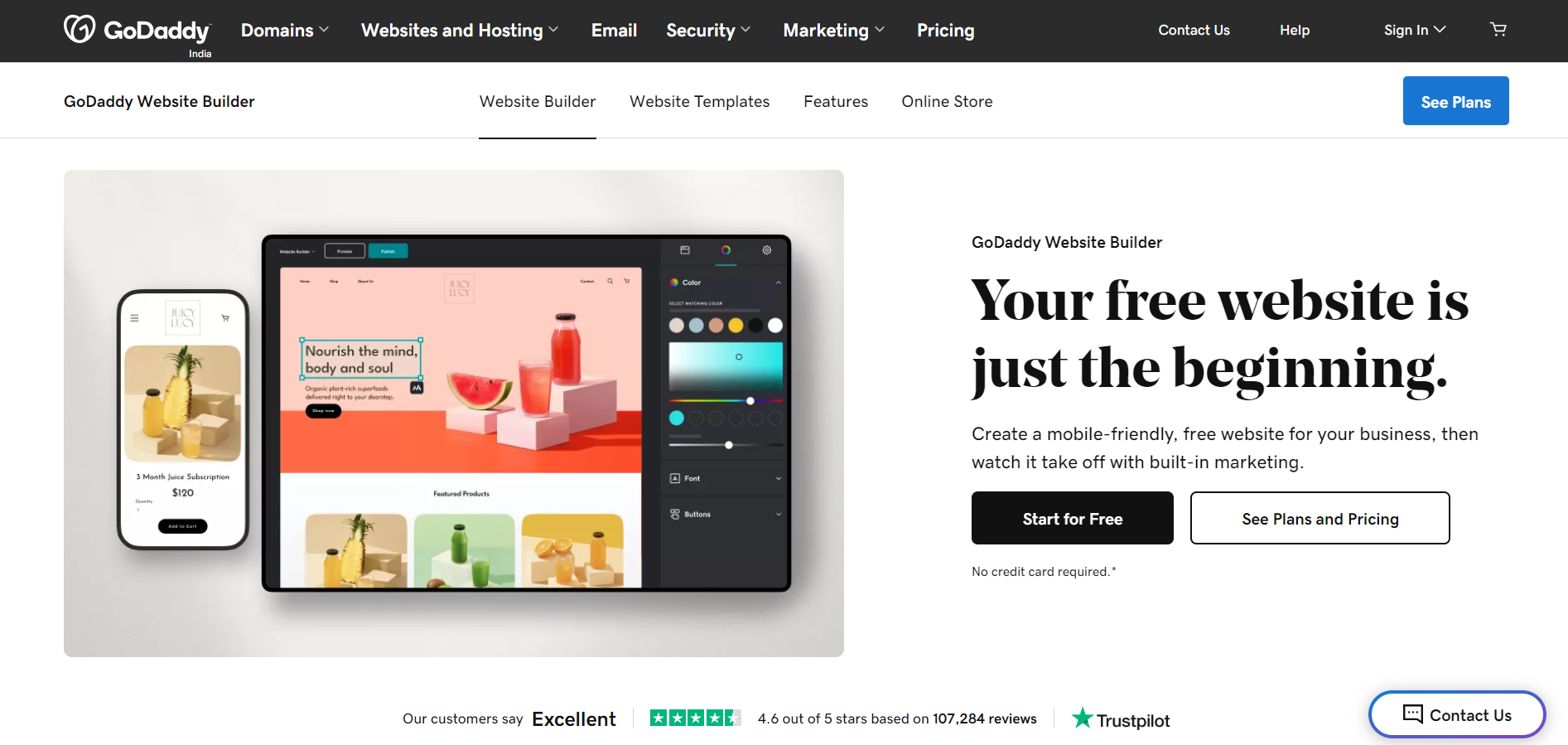
5. GoDaddy — Best for Simple eCommerce and Appointment-Based Businesses
Best For: Local service businesses, restaurants, and appointment-based businesses that need booking and scheduling built in.
GoDaddy’s website builder is designed for simplicity rather than design depth, with built-in scheduling, online booking, and payment tools that suit service businesses without requiring plugin configuration. Microsoft 365 email is included for the first year on eligible plans. The platform suits businesses that need a functional site with commerce features fast, though it offers limited design differentiation compared to Squarespace or Wix.
Ideal Client: Local service businesses, salons, gyms, and restaurants where booking integration is more important than visual customization.
6. Bluehost — Best for WordPress-Based Small Business Sites
Best For: Small businesses that want a WordPress site with integrated hosting, domain, and basic design support.
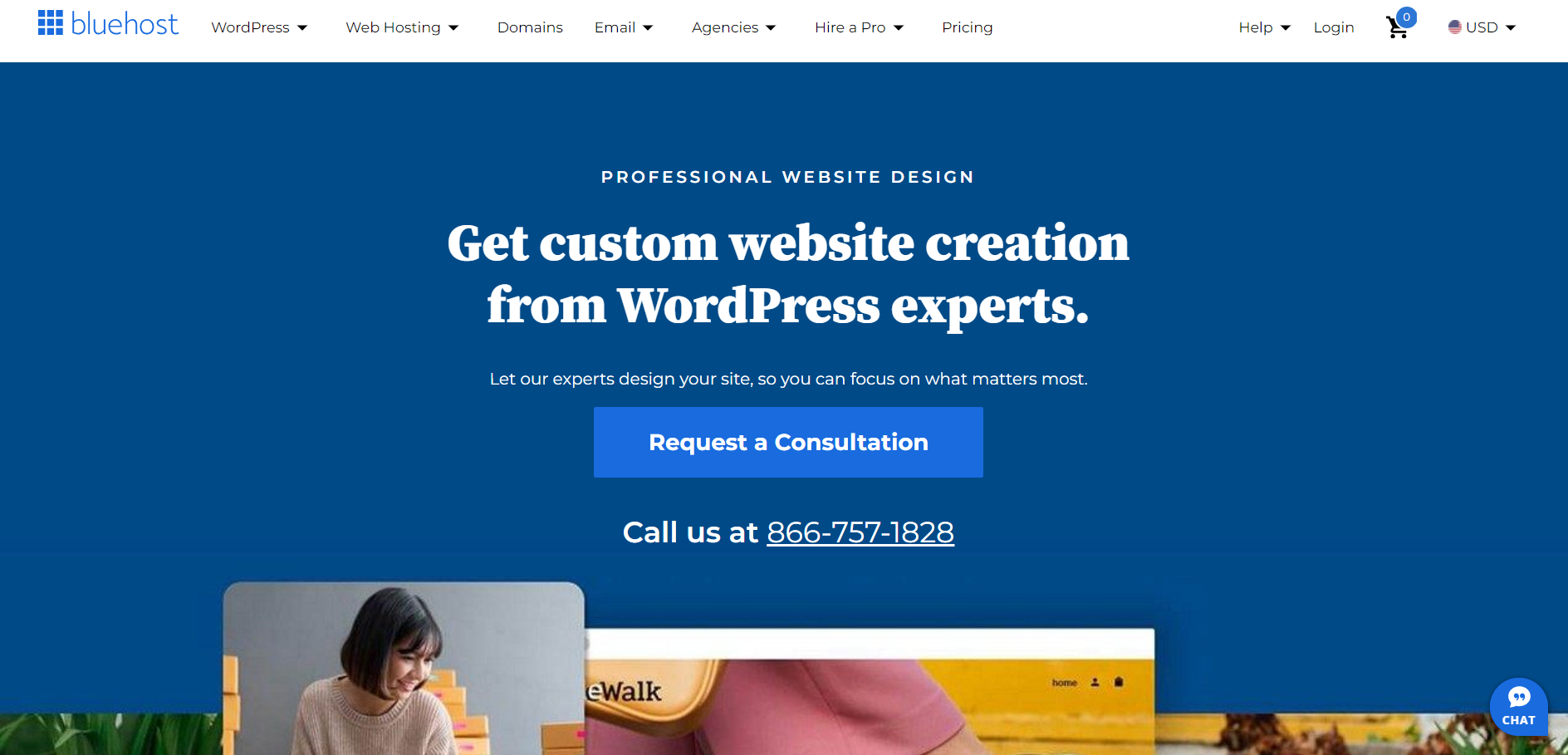
Bluehost is one of the most widely used WordPress hosting providers and offers website design services alongside its hosting plans. The combination of WordPress’s flexibility and Bluehost’s managed hosting infrastructure makes it a practical choice for businesses that anticipate needing to expand functionality over time. Pricing is accessible, and WordPress’s open ecosystem means content and design are fully portable if you switch providers.
Ideal Client: Growing businesses that want ownership and portability, with plans to add functionality as they scale.
7. IONOS — Best for International and Multi-Language Sites
Best For: Small businesses with multilingual audiences or international aspirations who need automatic translation and straightforward setup.
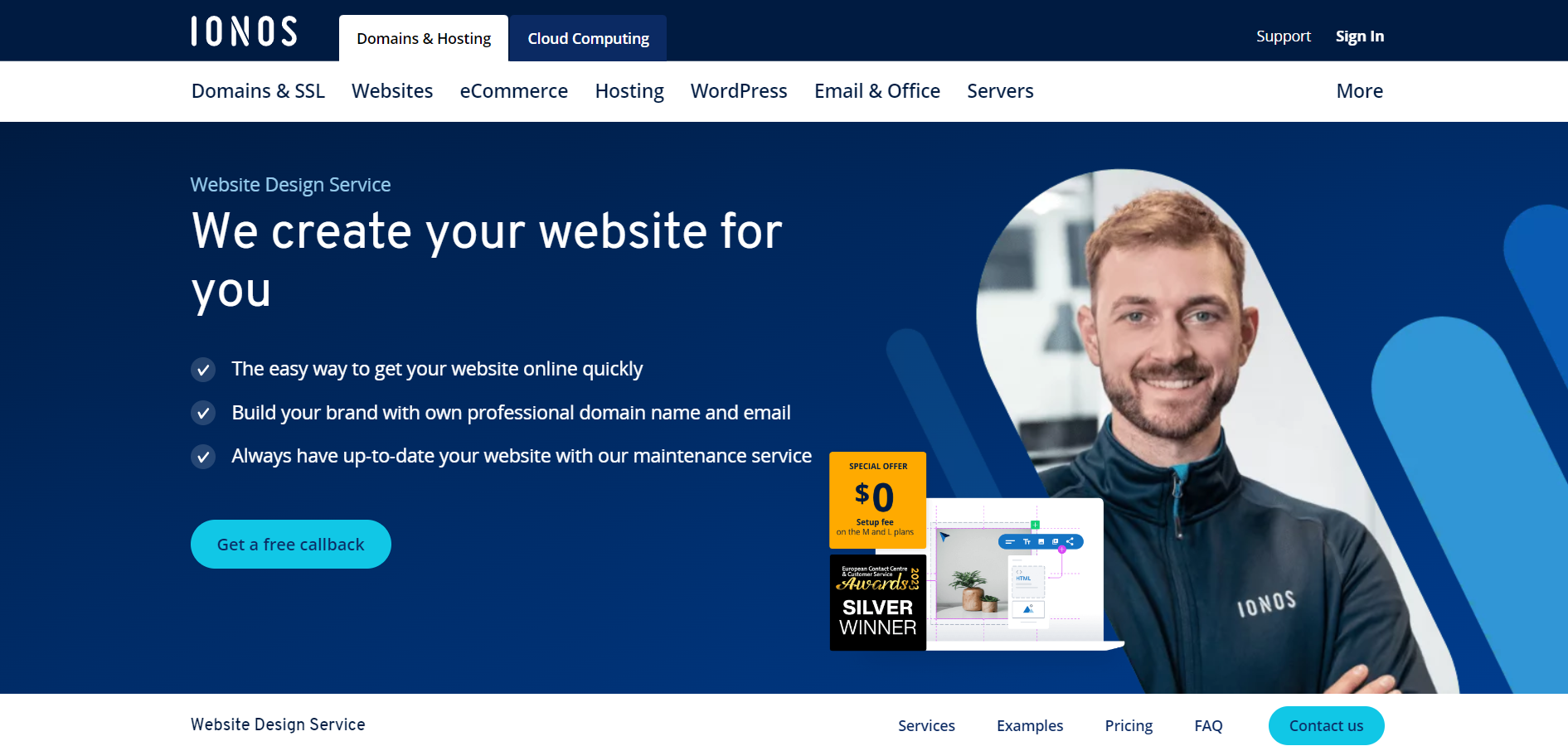
IONOS offers affordable web design services with automatic translation into 60+ languages built in, alongside free domain registration, SSL, and automatic security updates. The platform suits businesses that want a clean, manageable site without technical overhead. Customization depth is more limited than WordPress-based options, but the simplicity and included security maintenance reduce ongoing administrative burden.
Ideal Client: Local or international businesses that need a simple, secure, and professionally presented site with minimal management time.
What an Affordable Website Should Still Deliver
Affordability doesn’t mean accepting a slow, inaccessible, or search-invisible site. Google’s Core Web Vitals standards define current performance thresholds: Largest Contentful Paint under 2.5 seconds, Interaction to Next Paint under 200 milliseconds, and Cumulative Layout Shift under 0.1. Sites built below these thresholds affect both user experience and organic rankings. Before accepting a finished site from any provider, test it in Google PageSpeed Insights.
Google’s page experience guidance also requires mobile usability, HTTPS delivery, and content that’s easy to access. The U.S. Department of Justice web accessibility guidance explains that inaccessible websites can prevent people with disabilities from accessing business services, making accessible design a baseline expectation, not an optional upgrade.
Do You Own Your Website?
Ownership is the question most buyers don’t ask until they want to switch providers. Before signing, confirm that you will own the domain name, retain access to your CMS and all content files, and have the ability to migrate or export your site if you choose a different provider. Proprietary website builders often mean that stopping payment removes the site.
Open platforms like WordPress give you full portability. The FTC’s 2025 Consumer Review Rule enforcement is also worth noting when evaluating provider testimonials and case studies: look for verifiable portfolio examples rather than anonymous ratings when assessing quality.
Finding the Right Fit
The right choice depends on how much control you want, how much you plan to grow, and whether lead generation or brand presence is the primary goal.
Contact Flying V Group to see how integrated web design and SEO strategy produces websites that generate qualified traffic rather than just filling a digital presence requirement.
Frequently Asked Questions
How much should a small business spend on web design?
DIY builders like Hostinger start under $3 per month. Full-service agencies typically start at $2,000 to $5,000 for a custom build. The more useful number is total 12-month cost including hosting, domain, maintenance, and updates, not the advertised starting price.
What’s the difference between cheap and affordable web design?
Cheap prioritizes the lowest upfront cost. Affordable delivers controlled total cost while still meeting minimum standards for performance, mobile usability, security, and SEO readiness. A cheap site requiring a redesign after 18 months costs more than one built correctly the first time.
Do I own my website if I use a DIY builder?
With WordPress hosted on your own server, you own all content and can migrate freely. With proprietary builders like Wix or Squarespace, you own your content but cannot fully export the design. Your domain can be owned separately from whichever builder you use.
Does affordable web design include SEO?
Most providers include basic SEO capabilities such as editable title tags and meta descriptions. Few include active SEO strategy or technical SEO work. There is a meaningful difference between an SEO-ready website and an SEO-managed one — confirm what’s included before assuming your site will generate organic traffic from launch.
How long does it take to build a small business website?
DIY builders can produce a functional site in a day. Agency-designed sites typically take four to twelve weeks depending on scope and revisions. The most common delay is client-side: waiting on copy, images, and approvals at each stage.
What should every small business website include?
At minimum: clear service information, mobile-responsive design, HTTPS, a contact or conversion path, and SEO-editable metadata. Local businesses should implement Google Business Profile and consider LocalBusiness structured data per Google’s current guidelines. Analytics and Search Console access should be configured at launch.
Should I use a website builder or hire a web design agency?
Website builders work for simple informational sites with low conversion requirements. Agencies are worth the cost when lead generation, SEO performance, or brand differentiation are primary goals. If your website needs to do more than confirm you exist, an agency’s investment typically pays for itself faster than a DIY build.