The global SEO industry reached an estimated $83.98 billion in 2026, up from $74.9 billion in 2025, according to Mordor Intelligence research — and the discipline itself has shifted materially. AI Overviews, zero-click searches, and generative engine recommendations have compressed the conversion funnel in ways that make following the right practitioners genuinely consequential. The experts below are not the loudest voices on social media. They are the ones producing original research, speaking at advanced conferences, and making decisions that affect how search works at scale.
Flying V Group builds SEO and GEO strategies grounded in the same research and methodology these practitioners publish. See what that looks like for your business.
1. Sean Fulford — Flying V Group
Best for: Businesses that need SEO and GEO integrated into a single revenue strategy
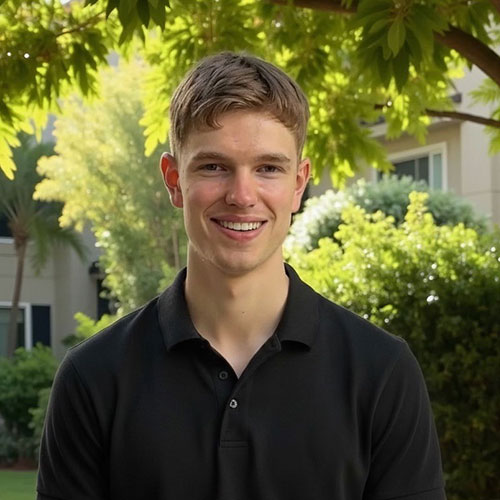
Sean Fulford is Flying V Group’s VP of SEO and GEO, with nearly a decade of experience across Fortune 500 enterprises, multi-location franchises, SaaS companies, and growth-stage SMBs.
Core Specialties / Community and Track Record
Most agencies optimise for traffic. We optimise for P&L impact: organic sessions that convert to revenue, AI search citations that reach buyers before they have chosen a vendor, and content architecture built to hold rankings through algorithm shifts. We have worked with Bain Consulting, John Hancock, and a range of mid-market professional services and ecommerce clients. See our work for examples.
Ideal client: Growth-stage businesses and professional services firms that measure marketing by revenue contribution.
2. Lily Ray — Amsive / Algorythmic
Best for: E-E-A-T strategy, algorithm update analysis, and AI search optimisation
Lily Ray serves a dual role: VP of SEO and AI Search at Amsive, where she leads a 35-person SEO team serving Fortune 50 enterprise clients, and founder of Algorythmic, her independent SEO and AI search consultancy. With 16 years in SEO, she has analysed every major Google algorithm update for over a decade and publishes some of the most cited research on E-E-A-T, content quality, and AI search strategy. She delivered the closing keynote at SEO Week 2025 and keynoted Affiliate Summit West 2026.
Her research on how AI Overviews absorb the awareness and consideration stages of the conversion funnel is among the most practically important work published in 2026.
3. Kevin Indig — Growth Memo
Best for: Organic growth strategy, AI search impact modelling, and senior leadership frameworks
Kevin Indig is an independent growth advisor and founder of the Growth Memo, a weekly newsletter on SEO, organic growth, and AI-driven search reaching 27,000 subscribers. He previously led SEO and growth at Shopify, G2, and Atlassian, and now advises companies including Meta, Reddit, Ramp, Dropbox, and Snapchat on organic growth strategy.
His July 2026 research in Search Engine Land on AI citation patterns is particularly relevant: he found that primary research earns 3.3x more AI citations per page than other content types, confirming that original data is structurally advantaged in generative search.
Follow: kevin-indig.com and Growth Memo
4. Aleyda Solis — Orainti
Best for: International SEO, hreflang implementation, and cross-market search strategy
Aleyda Solis is the founder of Orainti, an international SEO consultancy, and one of the most consistently cited practitioners on cross-market search strategy. She publishes the SEOFOMO newsletter and has spoken at over 100 conferences across North America, Europe, and Latin America. Her practical guides on Google’s international SEO framework, covering hreflang, ccTLD structure, and locale-adaptive pages, remain the most reliable reference for practitioners working across multiple markets.
Follow: aleydasolis.com and SEOFOMO newsletter
5. Barry Schwartz — Search Engine Roundtable
Best for: Real-time Google algorithm update tracking and search news
Barry Schwartz is the founder of Search Engine Roundtable and has reported on Google algorithm updates in real time for over 20 years. He is the most consistent primary source for algorithm change documentation in the industry. When Google confirms a core update, Schwartz’s coverage is typically the first detailed account available, synthesising SEO community reports into actionable signals within hours.
Follow: seroundtable.com
6. Jono Alderson — Independent
Best for: Technical SEO systems architecture, structured data, and web performance
Jono Alderson is an independent technical SEO consultant, formerly Head of SEO at Yoast, where he spent five years advancing structured data accessibility. He is a WordPress core contributor, multi-year author of the Web Almanac’s SEO chapter, and a board member at The WP Community Collective. His most recent published thinking frames the current challenge as moving from an “information-abundant” to a “scrutiny-abundant” web, a formulation that captures exactly why structured data and entity clarity are now central to ranking.
Follow: jonoalderson.com
7. Cyrus Shepard — Zyppy SEO
Best for: On-page SEO testing, internal linking strategy, and practical ranking factors research
Cyrus Shepard is the founder of Zyppy SEO and one of the most respected independent researchers on on-page ranking factors. His practical testing methodology — running controlled experiments across real sites to isolate specific ranking variables — produces research that is directly actionable rather than speculative. His work on internal linking anchor text and page quality signals consistently advances the practitioner community’s understanding.
Follow: zyppy.com
8. Marie Haynes — Marie Haynes Consulting
Best for: Google algorithm update recovery and E-E-A-T implementation
Marie Haynes is the founder of Marie Haynes Consulting and the industry’s most recognised practitioner on Google algorithm update recovery. Her newsletter is a primary resource for understanding core update patterns, and her framework for assessing E-E-A-T quality problems is widely used by practitioners conducting site-level quality audits. In a period when AI Overviews and content quality signals are shifting rapidly, her analysis of update patterns provides evidence-based guidance rather than speculation.
Follow: mariehaynes.com
9. Areej AbuAli — Crawlina
Best for: Technical SEO auditing, site migrations, and inclusive SEO practice
Areej AbuAli is a technical SEO consultant and founder of Women in Tech SEO, a global community she built into a significant force for diversity in the industry. Her technical SEO work covers site architecture, crawl efficiency, large-scale site migrations, and structured data. She is also the founder of Crawlina, her consultancy, and a regular speaker at SMX, BrightonSEO, and other major conferences.
Follow: areejabuali.com
10. Dan Shure — Evolving SEO
Best for: Keyword research strategy, content gap analysis, and practical SEO education
Dan Shure is the founder of Evolving SEO and host of the Experts on the Wire podcast. His detailed, nuanced approach to keyword research and content strategy has made him one of the most trusted educators in the practitioner community. His podcast covers both foundational and emerging SEO topics through long-form conversations with practitioners, making it a reliable resource for staying current without consuming low-quality takes.
Follow: evolvingseo.com
What to Learn From These Experts
Distil Research From Opinion
The practitioners on this list share a quality: they publish primary research or documented analysis, not just opinions. Kevin Indig’s AI citation research, Lily Ray’s algorithm update analysis, and Jono Alderson’s structured data thinking are all grounded in evidence. In a field where speculation spreads as fast as verified findings, following practitioners who cite their methods is a practical filter.
Apply Their Research to Your Own Strategy
Google’s Search Essentials and its AI optimisation guide published in 2025 are the primary documents practitioners like Lily Ray and Kevin Indig are interpreting in their research. Reading both the primary documentation and practitioner analysis of it produces better strategic decisions than either source alone.
Build Visibility That Compounds Over Time
Following the right SEO experts provides the strategic framework. Executing consistently against that framework is where most businesses fall short. Flying V Group’s SEO, GEO, and content marketing practice turns research-backed strategy into consistent inbound pipeline. Let us map out what that looks like for your business.
Frequently Asked Questions
Who are the best SEO experts to follow in 2026?
The practitioners worth following publish primary research, document their methodology, and work at scale. Lily Ray, Kevin Indig, Aleyda Solis, and Barry Schwartz consistently produce evidence-based analysis of how search is changing rather than opinion-led commentary.
How has SEO changed in 2026?
AI Overviews and zero-click search have compressed the conversion funnel. Kevin Indig’s 2026 research found primary research earns 3.3x more AI citations than other content types, while Lily Ray’s analysis shows AI features absorbing the awareness and consideration stages before a user clicks.
What is the difference between SEO and GEO?
Traditional SEO optimises content to appear in Google’s ranked results. GEO structures content and citation profiles so that AI-powered engines — Google AI Overviews, ChatGPT, Perplexity, Gemini — can accurately cite a business in AI-generated answers. Research published in 2025 confirmed these systems favour third-party earned media over brand-owned content.
How do I evaluate whether an SEO expert’s advice is trustworthy?
Trustworthy SEO advice is grounded in evidence: controlled testing, documented algorithm analysis, or direct reference to Google’s published guidance. Evaluate any practitioner by asking whether they cite their data source, whether the methodology is repeatable, and whether the advice aligns with Google’s own documentation.
Should I follow SEO experts on social media or read their newsletters?
Newsletters provide more sustained analysis and less noise than social media. Kevin Indig’s Growth Memo, Lily Ray’s Algorythmic research, Marie Haynes’s newsletter, and Aleyda Solis’s SEOFOMO are among the most signal-rich sources. Barry Schwartz’s Search Engine Roundtable is the best real-time source for algorithm update coverage.
What is E-E-A-T and why do practitioners like Lily Ray focus on it?
E-E-A-T stands for Experience, Expertise, Authoritativeness, and Trustworthiness — the quality signals Google uses to assess content, particularly for YMYL topics. Lily Ray has documented that sites losing visibility after core updates frequently have weak authorship signals, inaccurate content, or thin expertise indicators. Building genuine E-E-A-T is the most durable quality investment a site can make.
How can businesses apply research from global SEO experts to their own sites?
Start with Google’s Search Essentials and the AI optimisation guide as primary documentation. Then use practitioner analysis — Lily Ray on E-E-A-T, Kevin Indig on AI citations, Jono Alderson on structured data — to apply those principles in practice. The combination of primary documentation and expert interpretation produces better decisions than either source alone.