

Artificial Intelligence and Machine Learning continue to see massive growth thanks to proliferating data, cloud infrastructure, and innovation in deep neural networks. A range of emerging trends stands to transform these technologies and their business impact even further.
This guide explores 10 key developments to watch, according to tech leaders and analysts.
1. Generative AI Revolutionizes Marketing Landscape
Generative AI models like DALL-E 2, Stable Diffusion, and ChatGPT captivated the public imagination in 2022. Since then, many experts who provide artificial intelligence development services have argued that capabilities have crossed the chasm into widespread adoption.
In fact, a Goodfirms survey of 343 business leaders found that 83% of organizations now run AI across multiple functions or company-wide, with marketing and sales the most common use case.
One key aspect driving this adoption is enhanced accessibility, facilitated by the development of user-friendly interfaces tailored for non-technical users. Additionally, the commercial availability of advanced models like Prometheus and GPT-4 renders their integration feasible for enterprises of various scales.
Businesses are now afforded customizable options that cater to their branding requirements and risk tolerance levels. As a result, they can seamlessly integrate generative content creation, personalization, and conversational interfaces into numerous applications. This strategic utilization of marketing technology not only enhances operational efficiency but also cultivates customer satisfaction and loyalty.
2. Industrial-Grade AI Marketing Factories Revolutionize Deployment
In the realm of AI development, many companies grapple with challenges such as data management complexities, skill shortages, and the responsible scaling of models.
Enter cloud-based AI marketing factories, offering comprehensive services that streamline the deployment process—from establishing data pipelines to model construction, training, and ongoing maintenance monitoring.
By adopting assembly-line-like tooling processes, organizations without specialized resources can harness the power of AI securely. The streamlined experimentation facilitated by these factories expedites the development of production-ready use cases.
These innovative marketing factories contribute to the broader democratization of AI, empowering leading companies to surge ahead of their competitors.
3. Augmented Data Labeling
Data labeling remains essential for training AI models. However, manual labeling still faces bottlenecks, such as the availability of domain experts.
Augmented labeling solutions leverage AI to boost human productivity 5-10x, identifying and tagging useful data.
Workflows feature smart task assignments, automated suggestions, and quality checks. As a result, data variety and annotation accuracy improve dramatically.
Decreasing costs to procure training data unlocks building models for niche applications often ignored previously.
4. Decision Intelligence: Leveraging AI for Critical Marketing Choices
Harnessing decision intelligence revolutionizes the way marketing strategies are crafted, employing advanced AI techniques such as reinforcement learning and robustness metrics.
These cutting-edge solutions analyze vast arrays of data, considering numerous variables and interconnections to provide recommendations that align with marketing objectives.
From pricing strategies to retail planning, clinical trials to financial risk management, the stakes are high for every marketing decision. AI support enhances decision-making accuracy.
By automating scenario planning on a large scale, marketing leaders can adeptly navigate uncertainties and seize opportunities with confidence.
5. AI for Code
From automated testing to writing boilerplate code, AI accelerates software engineering by orders of magnitude.
Codex translates comments into advanced logic across programming languages, while startups build niche assistants achieving similar expertise.
Coders gain exponential leverage, focusing strategic efforts on novel capabilities while AI handles grunt work.
Surging dev velocity results in better applications that satisfy user needs faster.
The coming talent crunch gets alleviated with coding assistants multiplying the output of in-demand skills.
6. Secure and Trustworthy AI
As business-critical AI adoption grows, so do concerns around security vulnerabilities and unfair bias.
Specialized techniques provide robust solutions: Adversarial machine learning makes models resilient against malicious attacks, and algorithmic auditing detects unwanted dataset biases.
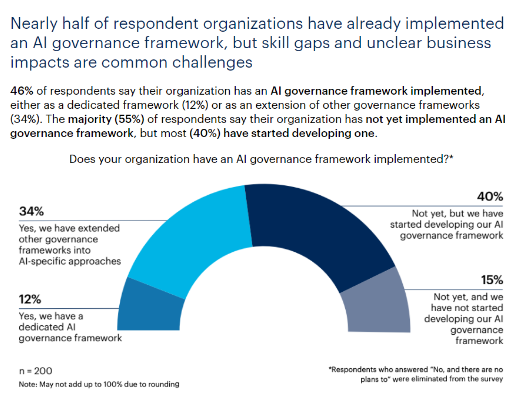
Governance frameworks like the DARPA model overview documents help technical leaders implement responsible AI across the full software lifecycle.
Ongoing investment in methods that make AI trustworthy cement its integral role in society.
7. Geospatial AI in Marketing
Geospatial analytics leverages data from IoT sensors, mobility trails, satellite imagery, and weather patterns, providing rich insights in 3D+ space and time. Advanced algorithms decode intricate relationships, empowering decision-making in transportation, construction, agriculture, and beyond, offering location-specific intelligence.
Startups are pioneering intuitive tools, making geospatial analytics accessible to marketers, supply chain analysts, and city planners who were once excluded due to the high cost of location data. Geo-AI is poised to revolutionize businesses, unveiling hidden patterns and opportunities within our world.
8. AI for Chemistry: Materials and Medicine Breakthroughs

AI makes strides in modeling molecular interactions, leading to two major innovations:
- 1. New Materials – AI simulation accurately predicts properties guiding the development of batteries, catalysts for carbon capture and high-performance polymers. Faster discoveries accelerate green technologies.
- 2. Drug Creation – Deep learning analyzes interactions between drugs and proteins, more accurately predicting therapeutic viability. It slashes pre-clinical R&D timelines by over 50%, resulting in more life-saving treatments.
Advanced innovations intersecting AI with sciences spawn further progress benefiting humanity.
9. The Creepier Side of Personalized Marketing
In today’s marketing landscape, personalized recommendations are becoming increasingly pervasive. Thanks to ubiquitous data collection, businesses can now create hyper-targeted behavioral models that cater to individuals across various devices.
Enterprises are leveraging sophisticated recommendation algorithms to achieve unprecedented levels of personalization, driven by the relentless pursuit of consumer data in the realm of surveillance capitalism.
While these tactics may enhance engagement and drive sales conversions in the short term, there’s a growing concern about the long-term consequences. The slippery slope of hyper-personalization risks normalizing the erosion of civil liberties if left unchecked. It’s essential to tread carefully on this tightrope, striking a balance between marketing innovation and safeguarding individual privacy rights.
10. More Jobs Lost Than Gained From Automation
As AI continues its rapid commercialization, the impact on traditional white-collar jobs becomes increasingly evident. While fears of widespread technological unemployment may be premature, many industries are facing significant disruption over the coming years.
Addressing the displacement of workers requires more than just retraining in skills that AI cannot easily replicate. It demands a nuanced approach from leaders, one that prioritizes human dignity alongside technological advancement.
With careful foresight, communities can navigate these challenges and discover new economic opportunities that benefit both people and technology. By striking a sustainable balance, we can pave the way for a future where innovation and human prosperity coexist harmoniously.